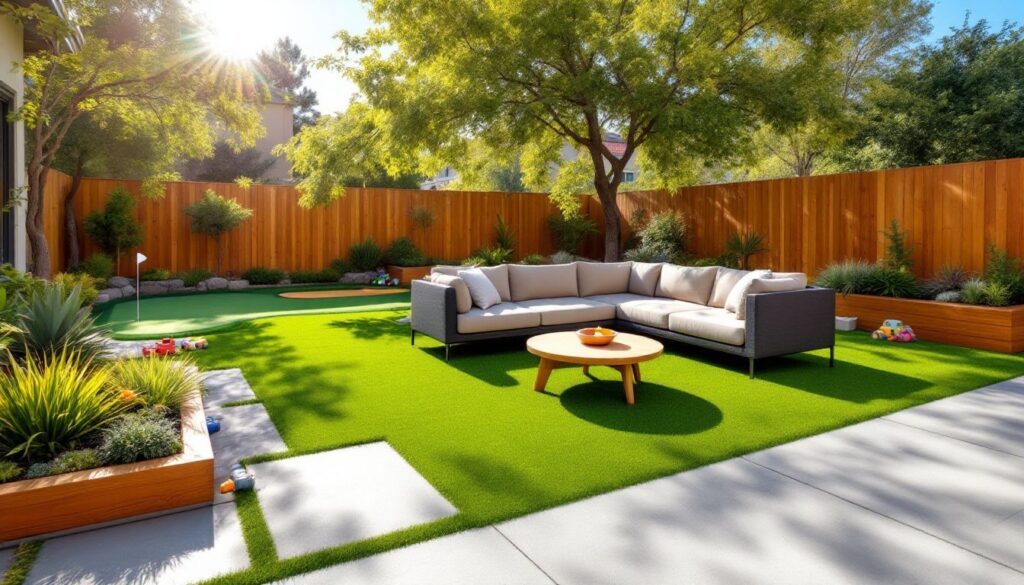

Artificial turf has come a long way from the stiff, plastic-looking rolls that once lined sports fields. Modern synthetic grass offers realistic textures, UV-resistant fibers, and drainage systems that make it a practical choice for residential backyards. Homeowners looking to cut watering bills, reduce lawn maintenance, or create usable outdoor spaces in areas with poor soil are turning to turf as a versatile foundation. Whether the goal is a kid-friendly play zone, a sleek patio extension, or a backyard putting green, artificial grass opens up design possibilities that natural lawns can’t always support.
Table of Contents
ToggleKey Takeaways
- Modern artificial turf eliminates weekly mowing, watering, and fertilizing while saving thousands of gallons of water annually in drought-prone regions.
- Installation costs range from $5–$20 per square foot, with quality turf backed by 10–15 year warranties, though heat retention on hot days remains a trade-off to consider.
- Turf backyard ideas work best when combined with pavers, hardscaping, and native plantings to create layered designs that balance low-maintenance benefits with visual appeal.
- Proper drainage systems, edge securement, and infill choices (such as zeolite or cork) are essential for safety, odor control, and long-term durability in play areas and pet zones.
- Specialized putting green turf with 0.5–0.75 inch pile heights and careful base grading enable homeowners to create playable backyard sports surfaces and recreational areas.
Why Artificial Turf Is a Game-Changer for Modern Backyards
Artificial turf eliminates the weekly mowing, fertilizing, and watering cycle that dominates lawn care schedules. In regions with water restrictions or drought-prone climates, synthetic grass can save thousands of gallons annually. Most quality turf products use polyethylene or polypropylene fibers that resist fading and maintain color without chemical treatments.
Drainage is built into the system. A typical installation includes a crushed stone base (usually 3–4 inches of decomposed granite or crushed rock) topped with a permeable weed barrier, then the turf itself with perforated backing. Rain and pet urine drain through the backing into the base layer, preventing puddles and odor buildup. Some products feature antimicrobial infill materials that further reduce smells.
Cost varies widely based on turf quality and labor. Expect to pay $5–$20 per square foot installed, depending on fiber density, pile height, and regional labor rates. High-traffic areas benefit from shorter pile heights (around 1–1.5 inches) and denser stitching, while decorative zones can use taller, softer varieties. Turf typically carries a 10–15 year warranty, though UV degradation and foot traffic will affect longevity.
One honest trade-off: turf retains heat. On a 90°F day, surface temperatures can reach 140–160°F, making it uncomfortable for bare feet. Infill options like zeolite or acrylic-coated sand help reduce heat retention compared to standard crumb rubber. Installing turf in partially shaded areas or using lighter-colored fibers also keeps temperatures more tolerable.
Creating a Low-Maintenance Play Area for Kids and Pets
Artificial turf turns muddy, patchy yards into clean, all-weather play surfaces. For families with young children or active dogs, it solves the constant battle against worn-out grass and dirt tracked indoors. Choose turf with rounded, non-abrasive fibers and a padded backing or underlayment to cushion falls. Some products include built-in shock pads that meet ASTM safety standards for playground surfaces.
Infill choice matters for safety and comfort. Traditional crumb rubber infill (recycled tire rubber) is budget-friendly but can retain heat and odor. Silica sand, zeolite, or cork infill offers better drainage, cooler surfaces, and natural odor control. For pet areas, antimicrobial infill options neutralize urine smells and resist bacterial growth.
Perimeter edging keeps turf secure and prevents lifting. Use bender board, treated lumber, or metal landscape edging anchored with stakes every 12–18 inches. Seams should run parallel to the direction of heaviest traffic (like a dog’s running path) and be joined with 6–8 inch wide seaming tape and turf adhesive. Avoid placing seams in high-impact zones where kids jump or tumble.
Cleaning is straightforward but necessary. Hose down pet areas weekly, and use a stiff-bristled broom or power broom to lift flattened fibers monthly. For stubborn odors, apply a 1:1 mix of white vinegar and water, let it sit for 10 minutes, then rinse. Many homeowners upgrading their yards incorporate these elements alongside broader backyard transformation strategies that balance function with visual appeal.
Designing a Stylish Turf Patio and Outdoor Living Space
Turf works surprisingly well as a soft flooring alternative in outdoor living areas. Instead of installing expensive decking or stamped concrete throughout an entire patio, many designers use turf as an accent surface between pavers, around seating zones, or under pergolas. It creates visual contrast and adds a tactile element that hardscaping alone can’t deliver.
Outdoor furniture sits directly on turf without issue, though high-weight items like stone tables may compress fibers over time. Use furniture coasters or paver pads under heavy legs to distribute weight and preserve pile height. For dining areas, consider bordering turf sections with a gravel or decomposed granite perimeter to catch spills and simplify sweeping.
Combining Turf With Pavers and Hardscaping Elements
Pavers and turf create strong geometric patterns when laid in a grid or checkerboard layout. Use 12×12-inch or 16×16-inch concrete pavers spaced 6–12 inches apart, with turf filling the gaps. This approach reduces the amount of turf needed (lowering cost) while providing stable walking paths and visual rhythm.
Installation sequence matters. Lay the paver base first, typically 4–6 inches of compacted crushed rock, then 1 inch of leveling sand. Set pavers, ensuring they’re flush or slightly proud of the planned turf surface. Excavate turf areas to accommodate the base layer (3–4 inches of crushed rock), weed barrier, and turf thickness (usually 1.5–2 inches including backing). The turf surface should meet or sit just below the paver tops to prevent tripping hazards.
Edge transitions cleanly with aluminum or steel edging to separate turf from gravel, mulch, or soil. Poorly secured edges will lift and curl, especially in areas with freeze-thaw cycles. For projects requiring extensive hardscaping integration, reviewing planning tips for outdoor renovations can streamline material selection and layout decisions.
Installing Putting Greens and Sports Areas With Turf
Backyard putting greens have become a popular DIY project thanks to specialized synthetic putting green turf with pile heights around 0.5–0.75 inches and tightly tufted, directional fibers that mimic real bent grass. These products roll truer than standard turf and allow for custom green designs, contouring, and even integrated cup holes.
Proper base grading and compaction are critical for a playable surface. Excavate to a depth of 4–5 inches, then install a compacted base of crushed granite or decomposed granite (DG). Compact in 2-inch lifts using a plate compactor, aiming for a firm, level surface. Many installers add a thin layer (0.5–1 inch) of fine sand over the base to fine-tune grade and smoothness before rolling out turf.
Contour and slope add realism. Create subtle breaks and undulations using additional base material shaped and compacted into mounds or slopes. For steeper grades, reinforce with landscape fabric or geotextile to prevent shifting. Once turf is laid, seams are joined with seaming tape and outdoor turf adhesive, then weighted for 24 hours to cure.
Beyond putting greens, turf supports other backyard sports zones. Bocce courts, cornhole areas, and batting cages all benefit from a flat, resilient surface. Standard turf (1–1.5 inch pile) works fine for these applications. Mark boundaries with contrasting turf colors, painted lines, or embedded pavers. For high-impact zones like batting cages, increase infill density to reduce fiber wear and improve ball response.
Keep in mind that turf-based sports surfaces generate heat and can feel harder than natural grass. Combining turf installations with features from modern outdoor design trends can help balance aesthetics with performance.
Blending Natural Landscaping With Artificial Grass
Artificial turf doesn’t have to dominate the entire yard. Many successful designs blend synthetic grass with native plants, trees, garden beds, and natural ground covers to create layered, naturalistic spaces. This approach reduces the total square footage of turf (and cost) while maintaining the low-maintenance benefits.
Use turf as a connective surface between planted areas. For example, install turf pathways that wind through perennial beds, around established trees, or alongside dry creek beds made from river rock. The contrast between soft, green turf and textured plantings or stone creates visual interest without requiring constant upkeep.
Tree root zones require special attention. Do not install turf directly over tree roots or within the drip line (the outer edge of the canopy). Tree roots need oxygen and water, and a poorly permeable turf base can suffocate them. Instead, leave a mulched or decomposed granite ring around the trunk (at least 3–4 feet diameter for mature trees) and start turf installation beyond that zone. According to professional hardscaping guides, proper site prep and drainage layers are essential for long-term turf performance around existing vegetation.
Adding Garden Beds, Trees, and Decorative Borders
Raised garden beds integrate seamlessly with turf layouts. Build beds using rot-resistant lumber like cedar or redwood, composite materials, or galvanized steel. Beds should sit directly on the turf or on a compacted gravel base if the soil will be heavy. Turf edges can be trimmed and tucked under bed frames using landscape staples or edging to keep everything secure.
For decorative borders, decomposed granite, pea gravel, or crushed stone transitions cleanly between turf and planted beds. Install metal or plastic edging to separate materials and prevent cross-contamination. Stone borders should be 2–4 inches deep and laid over landscape fabric to suppress weeds.
Incorporating native plants and drought-tolerant species around turf areas enhances sustainability. While turf eliminates watering for lawn areas, xeriscaping principles can extend water savings to the entire yard. Pairing turf with native grasses, succulents, or Mediterranean shrubs creates a balanced landscape. Resources like Better Homes & Gardens offer extensive plant selection guides for various climates.
Turf also works well as a foreground element beneath trees or shrubs. It provides a clean, finished look without the need for mulching or weeding. Just ensure irrigation systems (if present) are adjusted so sprinkler heads don’t saturate turf areas unnecessarily, turf drains well, but oversaturation can cause base settling or infill washout. Homeowners exploring diverse yard upgrades often reference beginner-friendly outdoor projects to build confidence before tackling complex installations.