
A small backyard doesn’t mean settling for a boring play area. With smart planning, even a compact yard can become a fun, safe zone where kids burn energy and build memories. The key is choosing equipment that fits the footprint, emphasizing vertical space, and prioritizing versatile features over sprawling layouts. Whether starting from scratch or upgrading an existing space, these ideas focus on practical, kid-friendly solutions that don’t require a pro installer or a second mortgage.
Table of Contents
ToggleKey Takeaways
- Maximize vertical space with compact play structures like A-frame or tower designs that fit 8×10-foot areas without sprawling layouts.
- Kid-friendly small backyard playgrounds require proper clearance zones: 6 feet around swings and slides, with impact-absorbing surfacing 9–12 inches deep underneath equipment.
- Multi-functional swing and slide combos with adjustable hangers and modular climbing walls turn limited yard space into engaging activity hubs for growing children.
- Ground-level play ideas like balance beams, sandboxes, and stepping stones eliminate fall-zone clearance requirements while offering hands-on fun for toddlers and younger kids.
- Regular monthly inspections and parental supervision prevent injuries by catching loose bolts, splintered wood, entrapment hazards, and testing equipment for heat buildup in direct sun.
- DIY projects on a budget—from tire swings to cargo net climbers—deliver affordable, customizable solutions for kid-friendly small backyard playgrounds without professional installation.
Maximize Your Small Backyard for Play
Small backyards demand intentional design. Start by measuring the play area and mapping out zones on graph paper or a digital planner. Account for clearance zones around active equipment, swings need roughly 6 feet of clearance front and back, slides require a 6-foot landing zone, and climbing structures need open perimeter space.
Vertical layouts work better than horizontal sprawl. A 10×10-foot area can comfortably fit a combination structure with a slide, climbing wall, and small platform if chosen carefully. Avoid plunking down equipment randomly: cluster active play in one corner and quieter activities (sandbox, art station) in another to prevent collisions.
Consider dual-purpose hardscaping when planning broader backyard makeover ideas. Low retaining walls double as balance beams. Raised garden beds with wide caps offer seating and play surfaces. Poured rubber surfacing or rubber tiles underneath equipment meet ASTM F1292 fall-height standards and eliminate mulch drift, which is a headache in tight spaces.
Sunlight and drainage matter. Place play structures away from full southern exposure in hot climates to prevent scalding metal or plastic. Ensure the area drains well, standing water under equipment is a safety hazard and breeds mosquitoes. A 2% slope away from structures helps.
Compact Play Structures That Pack a Punch
Pre-fab playsets designed for small yards typically measure 8×10 feet or less and include a slide, swing beam, and climb feature. Look for models with A-frame or tower designs that build upward rather than outward. These work well in narrow side yards or urban lots.
Materials matter. Cedar and redwood resist rot naturally and require less maintenance than pressure-treated pine, though they cost more upfront. Metal frames are durable but heat up in direct sun, powder-coated finishes help. Avoid cheap tubular plastic that cracks under UV exposure within two seasons.
Anchoring is non-negotiable. Most manufacturers spec ground anchors or concrete footings to prevent tipping. Skipping this step, especially in areas with wind or active climbers, is dangerous. Follow the install manual precisely. If the playset includes a canopy or upper deck, check local codes, some jurisdictions treat these as structures requiring setback compliance.
Multi-Functional Swing and Slide Sets
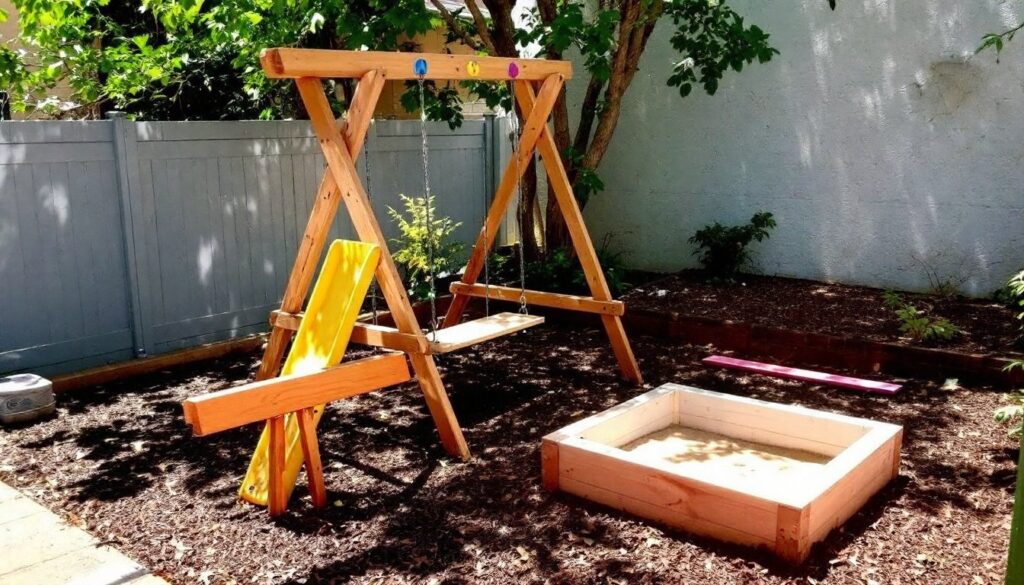
Swing-and-slide combos dominate the small-yard category. A basic unit with one belt swing, a toddler bucket seat, and a 5-foot slide fits in roughly 8×12 feet including clearances. Adjustable swing hangers let parents swap in a trapeze bar, gymnastics rings, or a disc swing as kids age.
Slides come in straight, curved, and wave designs. Straight slides take less space and cost less, but wavy slides add interest and slow descent speed, useful for younger kids. Verify the slide is UV-stabilized polyethylene to prevent fading and brittleness.
If space allows, top backyard makeovers often integrate a small climbing wall on the back of the slide tower. Modular bolt-on holds let homeowners adjust difficulty. This turns a simple slide into a multi-activity hub without expanding the footprint.
Creative Ground-Level Play Ideas
Ground-level play equipment suits toddlers, smaller yards, and families prioritizing low-impact fun. These setups don’t need the same fall-zone clearances as elevated structures, freeing up more usable space.
Balance beams made from 4×4 or 6×6 treated lumber, laid flat and anchored with rebar stakes, teach coordination and cost under $30 in materials. Paint them bright colors or leave natural. Space multiple beams at varying heights (flat on ground, propped on 4×4 blocks) to add challenge.
Stepping stones or log rounds create a nature-inspired pathway. Bury rounds halfway into the ground at random intervals. Kids love hopping between them, and the layout is easy to reconfigure. Use rot-resistant species like black locust or cedar, or opt for concrete stepping stones shaped like animals.
A small teepee or play tent anchored with tent stakes gives a cozy hideout vibe. Fabric versions pack away in winter: wooden teepee frames (built from 8-foot 2×2s lashed at the top) last years and can support climbing vines for shade.
For more adventurous families, simple backyard makeover tips include installing a low zip line kit rated for young kids. These run 25–40 feet and mount to trees or posts. Ensure terminal hardware is galvanized and rated for static load. Always supervise zip line use.
Sandboxes, Sensory Tables, and Dig Zones
Sandboxes remain a backyard staple. A 4×4-foot box built from two 8-foot 2×8 boards (cut and mitered) holds roughly half a cubic yard of play sand (about 13 fifty-pound bags). Line the bottom with landscape fabric to block weeds but allow drainage. Add a hinged lid or tarp to keep animals out.
Play sand (not construction sand) is washed, sifted, and safer for kids. It costs around $5–8 per fifty-pound bag at big-box stores. Avoid sandbox sand with crystalline silica warnings, look for ASTM C144-compliant products.
Sensory tables elevate messy play. Repurpose an old baby changing table or build a simple frame from 2×4s with a plastic tub insert. Fill with sand, water, dried beans, or kinetic sand depending on the season. These setups work on patios or decks and store easily.
Dig zones or mud kitchens appeal to hands-on kids. Dedicate a 3×3-foot patch of yard, edge it with landscape timbers, and let kids go wild with shovels and buckets. Add an old pot, wooden spoons, and a water source (a small bucket refilled as needed). It’s low-cost, high-engagement play. Many outdoor play ideas incorporate natural elements that spark creativity without bulky equipment.
DIY Playground Projects on a Budget
Building from scratch saves money and allows full customization. A basic swing set frame uses two 4×4 posts (10 feet long), a 4×6 crossbeam (8–10 feet), and concrete footings. Dig 30-inch-deep holes, set posts plumb, pour 60-pound bags of fast-set concrete, and bolt the beam across the top with galvanized carriage bolts. Hang swings with eye bolts rated for 1,000+ pounds. Total material cost runs $150–250 depending on lumber prices.
A cargo net climber offers big fun in little space. Mount a climbing net (available from playground suppliers) between two trees or posts 6–8 feet apart. Ensure tree trunks are at least 12 inches in diameter and healthy. Use tree-safe straps to avoid girdling bark. Nets cost $80–200 and handle multiple kids.
Tire swings are a nostalgic win. Use a new tire (not a roadside find with steel belts exposed) or a commercial tire swing. Drill drainage holes in the bottom. Hang from a tree limb at least 8 inches in diameter with a galvanized eye bolt through the limb, not wrapped around it. The rope should be three-strand polyester or chain, never bungee or elastic cords.
Reclaimed pallets work for climbing structures if properly prepped. Sand all surfaces, reinforce joints with deck screws, and anchor to the ground. Not all pallets are safe, avoid any stamped “MB” (methyl bromide treatment). Look for “HT” (heat-treated). Pallet projects take elbow grease but cost nearly nothing.
For design inspiration, backyard makeover examples show how small-scale DIY projects integrate seamlessly with the overall yard. Simpler builds like a wooden balance beam or sandbox fit easily into backyard makeovers for beginners.
Safety Considerations for Backyard Playgrounds
Safety isn’t optional. Start with impact-absorbing surfacing. The U.S. Consumer Product Safety Commission (CPSC) recommends engineered wood fiber, shredded rubber, poured-in-place rubber, or rubber tiles under and around equipment. Depth matters, 9–12 inches of wood mulch or rubber protects falls from up to 10 feet. Grass and dirt don’t cut it.
Inspect equipment monthly. Check for loose bolts, splintered wood, rusted chains, and worn swing seats. Tighten hardware with a socket wrench. Replace frayed ropes immediately. Moving parts like swing hangers should pivot freely, spray with silicone lubricant if they stick.
Entrapment hazards are serious. Openings between 3.5 and 9 inches can trap a child’s head. Measure gaps in railings, ladder rungs, and platform edges. If anything falls in that range, modify it. Similarly, avoid equipment with protruding bolts, sharp edges, or pinch points where moving parts meet.
Age-appropriate design prevents injuries. Toddlers (ages 2–5) need lower platforms (under 4 feet), wider steps, and enclosed slides. School-age kids (5–12) handle higher decks and open slides but still need proper supervision. Don’t mix age groups on the same structure unless it’s specifically rated for multi-age use.
Fencing isn’t required but helps in yards near streets or pools. A 4-foot fence with a self-closing gate keeps toddlers contained. Many ideas featured on home design sites balance safety and aesthetics without turning the yard into a fortress.
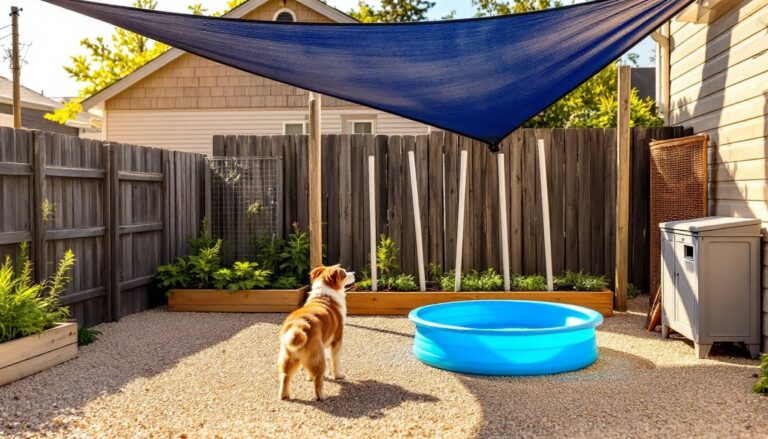
Sun protection reduces burn risk on hot days. Shade sails, pergolas, or large patio umbrellas keep equipment cool. Metal slides especially can reach 160°F in summer sun, test surfaces with the back of your hand before letting kids play. Some families reviewing outdoor living ideas integrate pergolas above play zones for dual-purpose shade and structure.
Always supervise active play. Even the safest setup can’t replace an adult keeping an eye out. Keep a basic first aid kit nearby and teach kids playground rules, no pushing, one kid per slide at a time, and feet-first sliding only.