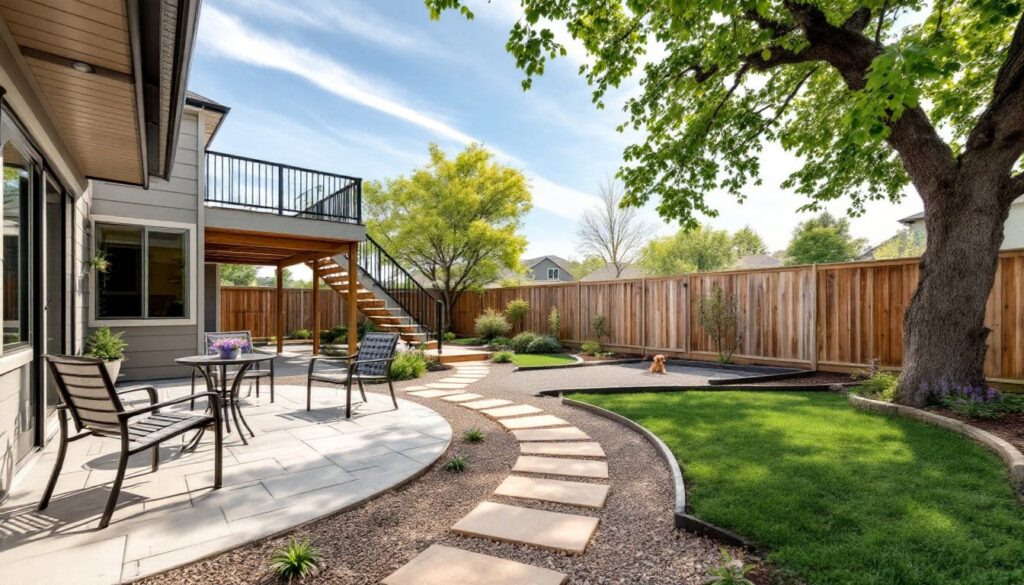

Lawns demand more time, water, and money than most homeowners realize. Between weekly mowing, fertilizing, aerating, and battling weeds, traditional grass can feel like a second job. A grass-free backyard offers a practical alternative, less maintenance, lower water bills, and year-round usability. Whether dealing with shaded areas where grass won’t grow, facing drought restrictions, or simply tired of weekend mowing, eliminating the lawn opens up design possibilities that actually fit how the space gets used.
Key Takeaways
- No grass backyard ideas eliminate the need for weekly mowing, fertilizing, and watering while reducing maintenance costs by hundreds of dollars annually.
- Hardscaping solutions like pavers, flagstone, and gravel create durable, low-maintenance surfaces that last decades and work well in high-traffic areas and sloped yards.
- Ground cover alternatives such as clover, creeping thyme, and native sedges provide lawn-like softness without mowing and require significantly less water once established.
- Decks and patios replace lawn with immediately usable outdoor living space, especially beneficial in yards with poor drainage or uneven terrain.
- Xeriscaping with drought-tolerant plants, proper hydrozoning, and drip irrigation reduces water use by 50-75% while maintaining year-round color and visual interest.
- Starting with a small test area or single zone allows homeowners to evaluate materials and plants before committing to a full backyard transformation.
Why Go Grass-Free in Your Backyard?
Grass-free backyards solve real problems. In arid climates, traditional turf requires 1-2 inches of water per week during growing season, a significant draw on municipal water supplies and household budgets. Many regions now restrict watering schedules or impose surcharges for high usage.
Maintenance costs add up quickly. Homeowners spend an average of 40 hours per year mowing, plus expenses for fertilizer, weed control, equipment repairs, and blade sharpening. For those without storage space or physical ability to handle a mower, these requirements become genuine obstacles.
Shaded yards present another challenge. Most turfgrasses need 4-6 hours of direct sunlight daily. Properties with mature trees, north-facing slopes, or structures that block sun struggle to maintain healthy grass. Patchy, thin turf invites mud, weeds, and erosion.
Going grass-free also expands functional space. Instead of an off-limits lawn during wet weather, a well-designed hardscape or ground cover garden provides usable square footage for dining, play areas, or container gardening. Homeowners considering a backyard makeover guide often start by evaluating how much lawn they actually use versus maintain out of habit.
Hardscaping Solutions for Low-Maintenance Beauty
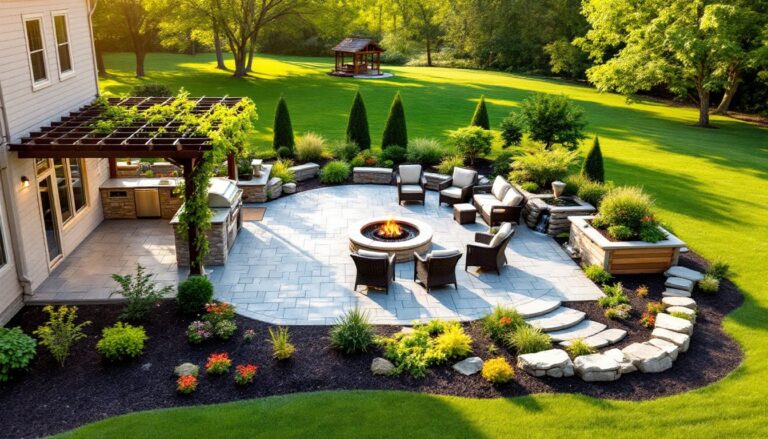
Hardscaping replaces organic turf with durable, low-maintenance materials. Properly installed, these surfaces last decades with minimal upkeep. They work especially well for high-traffic areas, sloped terrain, or yards where irrigation is impractical.
Concrete pavers come in modular sizes (commonly 12″×12″, 16″×16″, or plank formats) that interlock or lay with tight joints. They handle freeze-thaw cycles better than poured concrete and allow for easier repairs, lift and replace a damaged unit without tearing out an entire slab. Pavers require a compacted gravel base (4-6 inches) topped with 1-2 inches of bedding sand to prevent settling. Polymeric sand swept into joints resists weed growth and ant colonies.
Flagstone offers irregular, natural shapes in limestone, sandstone, or slate. It’s ideal for informal pathways or patios with a rustic look. Thickness varies from 1 to 3 inches: thicker stones span wider gaps in the base. Set flagstone in decomposed granite (DG) or mortar over a concrete pad for a more formal installation. Expect gaps between stones, fill with DG, pea gravel, or low-growing ground covers like thyme.
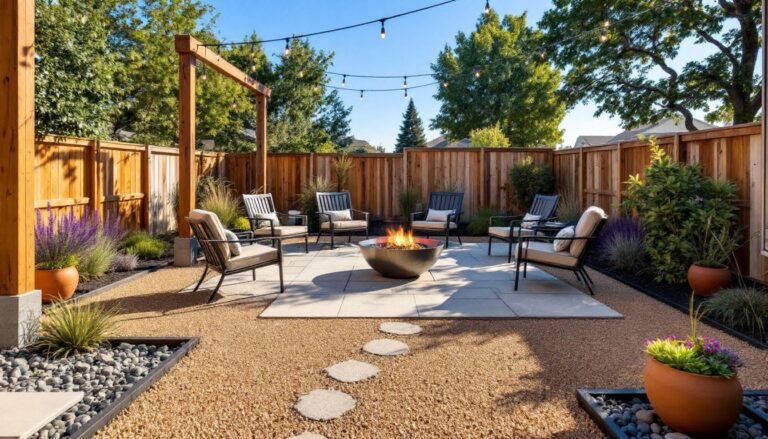
Gravel is the most budget-friendly hardscape option. Crushed granite, pea gravel (3/8″), or river rock (1-2″) spread over landscape fabric suppresses weeds and drains freely. Edge with steel, aluminum, or treated wood (typical edging is 4-6″ tall, sunk halfway) to contain material. Gravel does migrate and needs occasional replenishing, plan on adding 0.5-1 inch per year in high-use zones. It’s not ideal for furniture placement but works well for pathways, dog runs, or fire pit surrounds.
Pavers, Flagstone, and Gravel Pathways
Pathways define circulation and protect soil from compaction. A well-built path needs a stable base to avoid rutting and weed invasion.
For paver paths, excavate to 8-10 inches total depth: 4-6″ of compacted 3/4″ crushed stone base, 1-2″ bedding sand, then pavers. Rent a plate compactor (available at equipment rental centers for around $60/day) to tamp each layer. Hand-tamping with a post doesn’t achieve sufficient compaction for long-term stability. Slope the path 1-2% away from structures to shed water.
Flagstone paths can be dry-laid (set in sand or DG) or mortared. Dry-laid is more forgiving for beginners and allows water percolation. Space stones 1-2 inches apart, fill joints with DG or plant creeping thyme. Over time, stones may shift: releveling is straightforward with a pry bar and extra sand.
Gravel paths need edging and landscape fabric. Install 6″ steel or aluminum edging, stake every 3-4 feet, then lay commercial-grade landscape fabric (not the flimsy big-box version). Spread gravel 2-3 inches deep. A gravel path 3 feet wide and 20 feet long requires roughly 1.5 cubic yards of material. Many homeowners exploring low-impact lawn alternatives find gravel pathways a practical first step.
Ground Cover Alternatives That Thrive Without Mowing
Living ground covers offer the softness and color of a lawn without the mowing. Many tolerate foot traffic, suppress weeds, and require far less water once established.
Clover (Trifolium repens) is a nitrogen-fixing legume that stays green with minimal irrigation. White Dutch clover grows 4-8″ tall, spreads via runners, and tolerates moderate foot traffic. It thrives in full sun to partial shade and fixes its own nitrogen, no fertilizer needed. Mow once or twice per season if a neater look is desired, or let it bloom for pollinators. Seed at 4-8 ounces per 1,000 square feet: germinates in 7-10 days.
Creeping thyme (Thymus serpyllum) forms a dense, fragrant mat 2-4 inches tall. It handles foot traffic well and blooms in early summer with tiny pink or white flowers. Plant 6-12″ apart in full sun and well-draining soil. Once established (usually by the second season), it needs watering only during extended dry spells. Not recommended for heavy shade.
Creeping Jenny (Lysimachia nummularia) tolerates shade and moisture better than most ground covers. It grows 2-4 inches tall with round, bright green (or chartreuse in the ‘Aurea’ cultivar) leaves. It spreads aggressively, great for filling in but can invade adjacent beds. Works well under trees where grass fails.
Sedum and other succulents work in hot, dry climates. Low-growing varieties like Sedum album or Sedum acre form dense mats 2-6 inches tall, require no mowing, and need watering only during establishment. They don’t tolerate foot traffic but excel in areas with poor soil or no irrigation.
Native grasses and sedges offer texture without mowing in many regions. Buffalo grass (warm-season, native to the Great Plains) and blue grama stay short naturally. Pennsylvania sedge (Carex pensylvanica) thrives in shade and forms a 6-8 inch turf-like cover.
Planting ground covers requires patience. Most need 12-18 months to fill in completely. Prepare the site by removing existing turf (sod cutter or solarization), amending soil if needed, and installing drip irrigation or soaker hoses for establishment. Mulch between plugs or seedlings to suppress weeds until coverage is complete. Homeowners looking for beginner-friendly backyard makeovers often start with a small test area of clover or thyme before committing to a full yard conversion.
Creating Outdoor Living Spaces with Decking and Patios
Replacing lawn with a deck or patio creates immediate, usable outdoor living space. These structures work especially well in sloped yards, areas with poor drainage, or where extending indoor living is the priority.
Decking elevates the space above grade, solving drainage and slope issues. Pressure-treated southern yellow pine (rated for ground contact) is the most economical choice, typically $2-4 per linear foot for 5/4×6 or 2×6 decking. It requires annual cleaning and staining or sealing every 2-3 years. Composite decking (brands like Trex, TimberTech) costs $4-8 per linear foot but never needs staining, just occasional washing. Composites don’t splinter and resist rot, but they expand and contract more than wood: follow manufacturer’s gapping specs (usually 1/8″ to 1/4″) to prevent buckling.
Deck framing must meet local codes. Most jurisdictions require frost footings (depth varies by region, check your local building department), joists 16″ on center for 5/4 decking or 12″ for composite, and beam spans that match your joist species and size. Decks attached to a house need a ledger board through siding, bolted or lagged into the rim joist or band board, improper ledger attachment is a leading cause of deck collapses. Pull a permit for any deck over 30″ high or attached to a structure: inspections catch framing and fastener mistakes before they become hazards.
Patios sit at or near grade and can be built from pavers, flagstone, poured concrete, or brick. A typical patio base consists of 4-6 inches of compacted crushed stone, 1-2 inches of bedding sand, and surface material. For a 12’×16′ paver patio, expect to excavate and haul away roughly 3-4 cubic yards of soil and bring in similar amounts of base and sand.
Poured concrete is durable and cost-effective ($6-10 per square foot installed, depending on region and finish). It requires forming, proper sloping (minimum 2% grade away from structures), control joints every 8-10 feet to manage cracking, and finishing skills. DIYers can tackle small pads, but hiring a concrete crew makes sense for patios over 150 square feet. Stamped or stained concrete adds $2-5 per square foot to mimic stone or tile.
Safety reminder: Wear gloves and eye protection when cutting pavers or mixing concrete. Wet concrete is caustic, avoid skin contact. Use a dust mask or respirator when cutting masonry: silica dust is a serious respiratory hazard.
Many homeowners planning backyard makeover ideas start with a modest patio near the back door and expand over time, eliminating lawn incrementally as budget and ambition allow.
Xeriscaping and Drought-Tolerant Garden Designs
Xeriscaping replaces thirsty lawns with regionally appropriate plants, mulch, and efficient irrigation. It’s not about cactus and gravel, it’s strategic design that reduces water use by 50-75% while maintaining color and interest.
Start with a plan. Group plants by water needs: high (near the house or high-visibility areas), moderate (transition zones), and low (perimeter and slopes). This hydrozoning prevents overwatering drought-tolerant species and underwatering those that need more moisture.
Soil amendment is critical. Many drought-tolerant plants need excellent drainage. Work in 2-4 inches of compost to improve soil structure, but avoid overamending, native and adapted plants often prefer lean soils. In heavy clay, consider building raised berms or mounds 8-12″ tall to improve root aeration.
Mulch is the single most effective xeriscape tool. A 3-4 inch layer of shredded bark, wood chips, or decorative rock moderates soil temperature, suppresses weeds, and reduces evaporation. Keep mulch 2-3 inches away from plant stems and trunks to prevent rot. Organic mulches decompose and need replenishing every 1-2 years: rock mulch is permanent but doesn’t improve soil.
Plant selection depends on USDA hardiness zone and local climate. In the Southwest, consider agave, yucca, penstemon, salvia, and Mexican feathergrass. In Mediterranean climates, lavender, rosemary, California poppy, and manzanita thrive. For the Great Plains, buffalo grass, blue grama, prairie dropseed, and coneflowers are regionally adapted.
Drip irrigation delivers water directly to root zones with minimal waste. A basic drip system uses 1/2″ or 5/8″ mainline tubing with 1/4″ emitter lines spaced according to plant size. Emitters are rated in gallons per hour (GPH): use 1-2 GPH for perennials, 2-4 GPH for shrubs. Run zones 30-60 minutes, 2-3 times per week during establishment, then taper to weekly or biweekly once plants are rooted.
Permitting and codes: Most xeriscape projects don’t require permits unless they involve grading that changes drainage patterns, retaining walls over 3-4 feet (varies by jurisdiction), or irrigation tied into the main water line. Check local HOA rules, some have plant palette restrictions or front-yard coverage requirements.
Homeowners exploring current backyard makeover trends often incorporate xeriscaping principles, driven by water costs and climate awareness. Resources like The Spruce and Country Living offer region-specific plant lists and design inspiration.
Conclusion
A grass-free backyard isn’t a compromise, it’s a deliberate shift toward outdoor space that works harder and demands less. Whether installing pavers, planting ground covers, or building a deck, the investment pays off in time saved, water conserved, and year-round usability. Start with one zone, test materials and plants, and expand as confidence and budget allow.