
A backyard fountain does more than circulate water, it transforms a yard into a functional retreat with sound, movement, and visual interest. Whether a homeowner is planning a full landscape overhaul or adding a single focal point, fountains offer versatility for every style and budget. From classic tiered designs to DIY projects using repurposed materials, the right fountain can mask street noise, attract wildlife, and increase property value. This guide walks through design approaches, practical considerations, and installation tips to help DIYers and homeowners choose a fountain that fits their space, skill level, and vision.
Key Takeaways
- Backyard garden fountain ideas can mask street noise by up to 50%, create focal points, and add 5-10% to perceived home value with minimal maintenance compared to pools or ponds.
- Classic tiered fountains require a level base with 4-6 inches of compacted gravel and a submersible pump (50-200 GPH), while minimalist designs emphasize clean lines and precision leveling for sheet-flow effects.
- DIY fountain projects using container basins, upcycled materials, or disappearing pondless designs can reduce costs by 60-80% while still delivering visual appeal and ecosystem benefits.
- Proper pump sizing is critical—expect to lose 10% flow rate per foot of vertical lift—and GFCI protection within 6 feet of the fountain prevents electrical hazards.
- Natural stone fountains integrate seamlessly with landscaping, while wall-mounted and tabletop solutions maximize small spaces without consuming valuable patio or planting area.
Why Add a Fountain to Your Backyard Garden?
Fountains serve multiple functional roles beyond aesthetics. The sound of running water masks ambient noise from traffic, neighbors, or nearby commercial areas, a principle known as acoustic masking. Studies show that white noise from water features can reduce perceived noise pollution by up to 50%, making outdoor spaces feel more private.
From a practical standpoint, fountains also attract pollinators and birds, supporting local ecosystems. Honeybees, butterflies, and hummingbirds rely on shallow water sources, and a fountain with a basin or wide lip provides safe access. Also, moving water discourages mosquito breeding, unlike stagnant ponds or birdbaths.
Property value can see a modest lift, too. According to real estate data, well-designed water features can add 5-10% to perceived home value in landscaped yards, particularly in arid climates where water elements stand out. Fountains require less maintenance than koi ponds or in-ground pools, making them a lower-commitment upgrade.
Before installation, check local building codes. Some jurisdictions require electrical permits for hardwired pumps, especially if running a new GFCI-protected circuit. Most residential fountains use low-voltage pumps (12V or 24V) that plug into outdoor outlets, but any buried conduit or direct wiring typically falls under NEC Article 680 for swimming pools and water features.
Classic Tiered Fountain Designs for Timeless Elegance
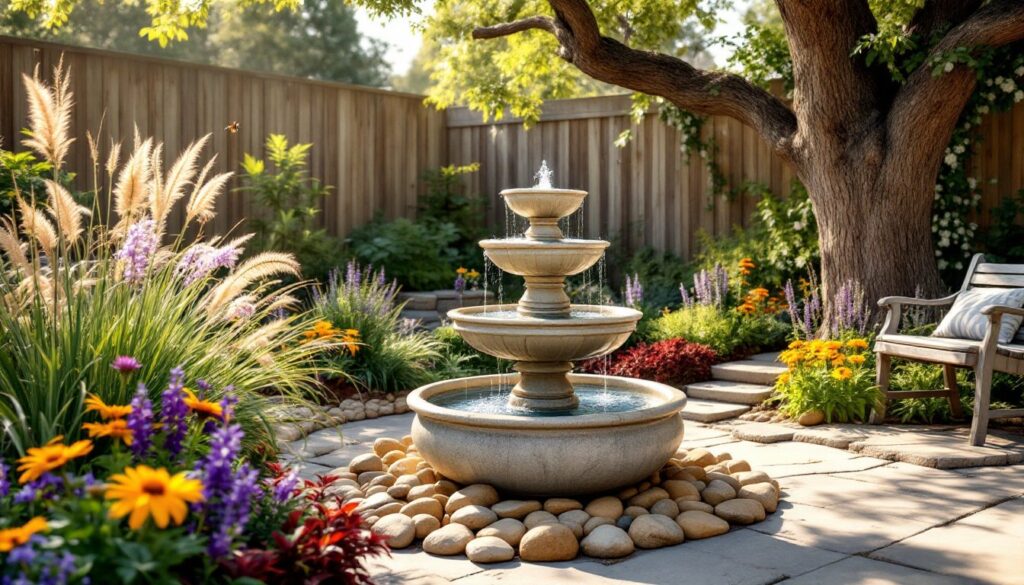
Tiered fountains, those stacked bowl designs, remain popular because they distribute water evenly and create layered sound. Most residential models range from 3 to 5 feet tall and use a submersible pump (50-200 GPH) to cycle water from the basin to the top tier.
Material choice affects longevity and maintenance. Cast stone (a concrete and crushed stone composite) mimics natural limestone or marble but costs 40-60% less. It weathers well in freeze-thaw cycles if sealed annually with a penetrating silicone sealer. Resin or fiberglass models weigh less and resist cracking, but UV exposure can fade pigments over 5-7 years unless treated with UV-resistant coatings.
Installation requires a level, compacted base, typically 4-6 inches of compacted gravel topped with leveling sand. An unlevel fountain will overflow on one side and run dry on the other, burning out the pump. Use a 4-foot level and check in multiple directions.
Many homeowners integrate tiered fountains into broader landscape updates that include lighting, pathways, and planting beds. For best results, position fountains where the sound carries toward seating areas but away from bedroom windows if noise at night is a concern.
Maintenance involves cleaning the pump intake monthly during active use and winterizing in cold climates. Drain the basin, remove the pump, and cover the fountain or move smaller models indoors to prevent freeze damage.
Modern Minimalist Fountain Ideas
Minimalist fountains emphasize clean lines, monochromatic palettes, and geometric forms. Common materials include brushed stainless steel, corten steel, and poured concrete. These designs often feature a single spout or sheet flow rather than multiple tiers.
Corten steel (weathering steel) develops a stable rust patina that protects the underlying metal. It suits contemporary landscapes but will stain adjacent concrete or pavers during the first 6-12 months. Install a drip edge or gravel buffer to manage runoff.
Concrete trough fountains work well in urban or industrial-style yards. A typical DIY build uses an 18-24 inch rectangular planter as the basin, a submersible fountain pump, and a vertical copper pipe or bamboo spout. Seal the interior with a waterproof concrete sealer to prevent leaching and algae buildup.
Sheet-flow or spillway fountains create a glassy water effect. These require precise leveling, within 1/8 inch across the spillway edge, to ensure even flow. Most commercial spillway kits include a weir plate (a thin metal strip) that guides water uniformly.
Lighting plays a larger role in minimalist designs. Submersible LED lights (12V) highlight the water’s movement without competing visually. Warm white (2700-3000K) or blue (5000-6000K) LEDs create distinct moods. Connect lighting to a low-voltage transformer with a timer or photocell for automatic operation.
For inspiration on how minimalist water features fit into current outdoor design trends, consider pairing fountains with native grasses, decomposed granite pathways, or steel planter boxes.
DIY Fountain Projects for Budget-Conscious Homeowners
Building a fountain from scratch can cut costs by 60-80% compared to purchasing pre-made units. The core components remain the same: a basin, pump, water delivery system, and decorative element.
Container fountains are the simplest entry point. A glazed ceramic pot, whiskey barrel, or galvanized tub serves as the basin. Drill a hole for the power cord (or use a basin without a drain), add a submersible pump (80-120 GPH for small setups), and stack decorative elements like river stones, driftwood, or clay pots on top. Total cost typically runs $40-$80 depending on materials.
For a disappearing fountain (also called a pondless fountain), dig a small reservoir pit, line it with pond liner, and cover with a steel grate. Place river rocks or a sculpture on the grate. Water recirculates through the hidden basin below, eliminating standing water and reducing mosquito risk. This design requires more excavation but offers a cleaner look.
Upcycled materials add character and reduce costs. Old watering cans, wine bottles, or vintage pitchers can become spouts. Drill through ceramic or glass using a diamond-core drill bit (3/8-inch or 1/2-inch) with water lubrication to prevent cracking.
Always use a GFCI-protected outdoor outlet within 6 feet of the fountain. Most pumps include a 6-10 foot power cord. If additional length is needed, use an outdoor-rated extension cord with a waterproof connector boot.
Pump sizing matters. A general rule: for every foot of vertical lift, expect to lose about 10% of flow rate. A 100 GPH pump lifting water 2 feet will deliver roughly 80 GPH at the spout. Manufacturers list head height (maximum lift) and flow rate on pump specs.
Anyone tackling beginner-level outdoor projects should start with a container fountain before moving to in-ground installations. The same pump troubleshooting and leveling skills apply, but mistakes are easier to correct.
Natural Stone and Rock Fountain Styles
Stone fountains integrate seamlessly with naturalistic or xeriscaped landscapes. Options include bubbling rock fountains, stacked slate spillways, and carved stone basins. These designs mimic natural springs or creek beds.
Bubbling rock or boulder fountains use a single large stone (100-500 lbs) drilled through the center. Water pumps up through the hole and cascades over the rock’s surface. Drilling granite or basalt requires a masonry core bit and hammer drill, or outsourcing to a stone yard. Many suppliers offer pre-drilled boulders.
Stacked slate or flagstone fountains layer thin stones to create stepped waterfalls. Use landscape adhesive or mortar to secure each layer, and ensure the stack is plumb. Slate works well because it naturally splits into flat pieces and develops attractive mineral staining over time.
For those seeking creative makeover ideas, pairing stone fountains with native plantings like sedums, ornamental grasses, or succulents enhances the natural aesthetic.
Basin options include pre-formed plastic reservoir basins or custom-dug pits lined with EPDM pond liner (45 mil thickness). Liner resists UV breakdown and punctures better than PVC alternatives. Overlap liner edges by at least 12 inches and secure with landscape staples or stones.
Maintenance involves scrubbing algae buildup seasonally. Use a stiff brush and a 10% bleach solution (rinse thoroughly afterward), or add a barley straw extract to inhibit algae growth naturally. Avoid algaecides containing copper if the fountain attracts wildlife, as copper is toxic to amphibians.
Install a debris net or fountain filter sock over the pump intake to prevent clogging from leaves, pine needles, or sediment. Clean weekly during fall leaf drop. According to design and gardening resources, proper pump maintenance extends lifespan by 3-5 years.
Small Space Fountain Solutions for Compact Gardens
Limited square footage doesn’t eliminate fountain options, it shifts the focus to wall-mounted, tabletop, or corner designs. These solutions deliver sound and movement without consuming valuable patio or planting space.
Wall-mounted fountains attach to fences, exterior walls, or privacy screens. They require a backing strong enough to support the weight when filled (often 50-150 lbs). Anchor into wall studs or masonry using lag bolts or masonry anchors rated for at least twice the fountain’s wet weight. A typical wall fountain extends 8-16 inches from the surface.
Tabletop fountains work on deck railings, side tables, or window ledges. Most run on micro-pumps (20-40 GPH) and plug into standard outlets. These units are portable, making them ideal for renters or anyone wanting seasonal flexibility. Look for designs with recirculating reservoirs that hold at least 1-2 quarts to reduce refill frequency.
Corner fountains maximize unused angles in L-shaped patios or courtyard gardens. These often use a triangular or quarter-round basin and vertical design elements to draw the eye upward. They pair well with compact seating clusters or container gardens. Homeowners looking at examples of efficient layouts often find corner fountains solve both space and aesthetic challenges.
For balconies or rooftop gardens, weight is critical. Check the load-bearing capacity of the structure (typical residential balconies support 40-60 lbs per square foot). Lightweight resin, fiberglass, or thin-gauge metal fountains reduce structural stress. Distribute weight over multiple joists if possible, and consult building management or an engineer if unsure.
Water evaporation increases in smaller basins due to higher surface-area-to-volume ratios. In dry climates or during summer, expect to top off water 2-3 times per week. Add a float valve (like those used in toilet tanks) to automate refills if a water line is accessible. This requires drilling a small hole for the supply line and connecting via compression fittings.
Conclusion
Choosing the right fountain hinges on space constraints, aesthetic goals, and willingness to maintain the feature. Tiered classics offer broad appeal, minimalist designs suit contemporary landscapes, and DIY builds provide budget flexibility. Stone fountains blend into naturalistic settings, while compact options fit tight quarters without sacrificing impact. Review practical transformation tips before starting, and remember that proper leveling, pump sizing, and GFCI protection prevent most common installation headaches. For further design guidance, comprehensive fountain advice and additional project inspiration offer detailed breakdowns of installation techniques and material options.