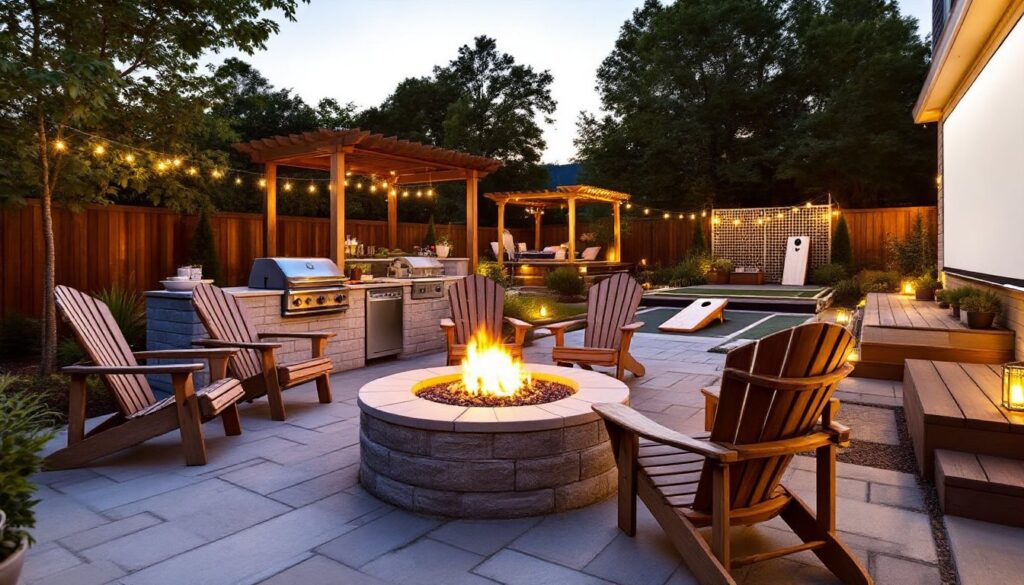

Turning a backyard into an entertainment hub doesn’t require a massive budget or a complete landscape overhaul. With strategic planning and a few DIY-friendly upgrades, homeowners can create functional zones for movie nights, cookouts, games, and late-evening gatherings. The key lies in defining how the space will be used, whether for family-friendly activities, adult entertaining, or a mix of both, and building around those priorities. The following ideas focus on practical, buildable solutions that add real value to outdoor living.
Table of Contents
ToggleKey Takeaways
- Backyard entertainment ideas transform outdoor spaces into functional entertainment hubs through strategic zones for movies, cookouts, games, and gatherings without requiring massive budgets.
- An outdoor movie theater needs a 3,000+ lumen projector, weather-resistant speakers, and properly spaced seating (24–30 inches apart) combined with GFCI-protected electrical outlets for safe evening viewing.
- Fire pit lounges extend the outdoor season and anchor gathering spaces; DIY versions use fire-rated bricks stacked in 36–44 inch circles with 3 feet of clearance on all sides for safety.
- Multi-purpose game zones require leveled, compacted ground and standardized spacing: cornhole boards 27 feet apart, bocce courts 60 feet long, and horseshoe pits 40 feet between stakes.
- Outdoor kitchens require weather-resistant countertops (concrete, quartz, or porcelain tile), GFCI-protected electrical outlets, and proper slope for drain lines to ensure functional entertaining spaces.
- Layer outdoor lighting with task, ambient, and accent fixtures, use 14-gauge wire for string light runs over 50 feet, and bury wiring at proper depths (12–24 inches) per NEC code for safety and durability.
Create an Outdoor Movie Theater Experience
Setting up an outdoor theater requires a flat surface, a projection system, and comfortable seating. The simplest approach uses a white bedsheet stretched tight across a frame or hung from an exterior wall, though outdoor projection screens (starting around 100-120 inches diagonal) offer better image quality and durability.
For projectors, look for models rated at 3,000 lumens or higher for evening use when ambient light is still present. Battery-powered or plug-in Bluetooth speakers work well for small yards, but a dedicated outdoor sound system with weather-resistant speakers provides clearer audio. Run speaker wire through conduit if burying it underground to protect from moisture and accidental shovel strikes.
Seating can range from Adirondack chairs and outdoor sofas to oversized floor cushions or even bleacher-style tiered platforms built from pressure-treated 2x10s and secured with 3-inch deck screws. If building seating, space rows 24 to 30 inches apart for legroom. Add string lights or low-voltage landscape lighting along pathways to prevent trips in the dark, and always use a GFCI-protected outlet for any electrical equipment. Outdoor theaters are a common feature in modern backyard transformations, blending recreation with functional design.
Build a Fire Pit Lounge Area
A fire pit anchors outdoor spaces and extends the usable season into cooler months. Before digging, call 811 to locate underground utilities and check local codes, some jurisdictions restrict open flames or require permits for permanent structures.
For a DIY fire pit, use fire-rated bricks or concrete retaining wall blocks stacked in a circle with an interior diameter of 36 to 44 inches. Excavate 4 to 6 inches deep, lay a gravel base for drainage, and stack blocks dry (no mortar needed for basic designs). Leave gaps between blocks in the bottom course for airflow. A steel fire ring insert (around $50-$80) protects masonry from thermal cracking and contains embers.
Surround the pit with pea gravel, flagstone pavers, or a poured concrete pad extending at least 3 feet in all directions for safety. Built-in seating can be constructed from the same retaining wall blocks capped with 2×10 or 2×12 cedar or treated lumber. Space seats 3 to 4 feet from the fire’s edge. For permanent installations, consider a propane or natural gas fire feature with a shutoff valve and black iron pipe, this requires basic plumbing skills or a licensed professional if running a new gas line.
Always keep a fire extinguisher or garden hose nearby, and never leave flames unattended. Homeowners looking to create cohesive outdoor living zones often pair fire pits with built-in benches and ambient lighting.
Design a Multi-Purpose Game Zone
Dedicating space for lawn games and activities keeps guests engaged and makes use of open yard areas. Start by leveling the ground, most games require a flat, compacted surface. Remove sod, add a 2-inch base of decomposed granite or crushed limestone, compact with a hand tamper or plate compactor, then top with a final 1-inch layer of fine material.
For cornhole, regulation boards sit 27 feet apart (front edge to front edge). Build boards from 1/2-inch plywood cut to 24 x 48 inches, framed with 2x4s, and sealed with exterior polyurethane. Drill a 6-inch hole centered 9 inches from the top edge. Attach 2×4 legs at a 12-degree angle with carriage bolts.
Bocce courts measure 10 feet wide by 60 feet long. Frame with pressure-treated 2x6s, fill with crushed oyster shell or fine gravel, and compact well. Edge with landscape timbers or metal edging to contain material.
For horseshoe pits, regulation stakes are 1-inch diameter steel rods set 40 feet apart, protruding 14 to 15 inches above grade. Surround stakes with sand or clay in a 6 x 6-foot pit framed with landscape timbers.
Lawn Games and Activity Stations
Portable games like giant Jenga (made from 2x4s cut to uniform lengths and sanded smooth), ladder toss, and spikeball require minimal setup. Build a storage bench from 3/4-inch plywood and 2x2s to keep games organized and dry. Install a simple pegboard on an exterior wall or shed to hang equipment like badminton nets, frisbees, and yard darts. These game-ready spaces add instant appeal for gatherings while keeping clutter contained.
Set Up an Outdoor Kitchen and Bar
An outdoor kitchen doesn’t need to rival an indoor setup to be functional. Start with the essentials: a grill station, prep counter, and storage. Built-in designs use concrete block or steel stud framing clad with stacked stone veneer, cement board, or outdoor-rated tile. Frame dimensions to fit standard grill cutouts (check manufacturer specs before building).
Countertops should be heat-resistant and weather-proof. Options include poured concrete (sealed with food-safe sealer), granite or quartz remnants (often available at discount from countertop fabricators), or porcelain tile over cement backer board. Counters should sit at 36 inches high (standard kitchen height) with at least 18 inches of prep space on each side of the grill.
For a bar setup, build a simple L-shaped counter from pressure-treated 2×4 framing, sheathed with 1/2-inch exterior plywood, and topped with your choice of surface material. Install a 12-inch overhang on the guest-facing side to accommodate bar stools. Add a small outdoor-rated refrigerator (check that it’s rated for ambient temps in your climate) and a sink if plumbing is accessible, run PEX tubing from the house and slope drain lines at 1/4 inch per foot toward existing waste lines.
Electrical outlets near food prep areas must be GFCI-protected per NEC code. If adding new circuits, this typically requires a permit and may be best handled by a licensed electrician. Install a pop-up outlet in the countertop for blenders and small appliances, keeping cords off work surfaces. Outdoor kitchens are a highlight of many recent backyard upgrades, especially as homeowners prioritize functional entertaining spaces.
Install Ambient Lighting and Sound Systems
Lighting and sound shape the mood and usability of outdoor spaces after dark. For lighting, combine task, ambient, and accent layers. Task lighting includes anything over grills, prep areas, or game zones, use LED floodlights or directional spotlights rated for wet locations (look for an IP65 rating or higher).
Ambient lighting can be string lights, low-voltage landscape kits (12V systems are DIY-friendly and safer than 120V), or solar path lights. String lights should use 14-gauge wire for runs over 50 feet to prevent voltage drop. Hang them on galvanized steel cable tensioned between posts or a pergola frame, don’t rely on the light string itself for structural support.
For accent lighting, uplights at the base of trees or architectural features add depth. Install fixtures on separate switches or use smart outdoor plugs for scheduling and remote control. All outdoor electrical work must follow NEC guidelines: use weatherproof boxes, in-use covers, and bury wiring at the proper depth (typically 12 inches for low-voltage, 18-24 inches for line voltage in conduit, depending on local code).
Outdoor sound systems range from portable Bluetooth speakers to permanent weather-resistant in-ground or rock speakers. For built-in systems, run direct-burial speaker wire (14- or 16-gauge) from an indoor or outdoor amplifier to speaker locations. Use a separate zone or volume control for outdoor areas to avoid overpowering indoor audio. Keep speakers at least 10 feet from property lines to minimize noise complaints.
Many homeowners integrate audio as part of comprehensive outdoor living designs, blending technology with natural materials.
Conclusion
Transforming a backyard into an entertainment zone comes down to thoughtful planning and prioritizing projects that match how the space will actually be used. From fire pits to outdoor kitchens, each element should serve a clear function and be built to handle weather and heavy use. Homeowners who tackle these projects with the right materials, tools, and attention to code will enjoy years of gatherings, games, and late-night movies under the stars.