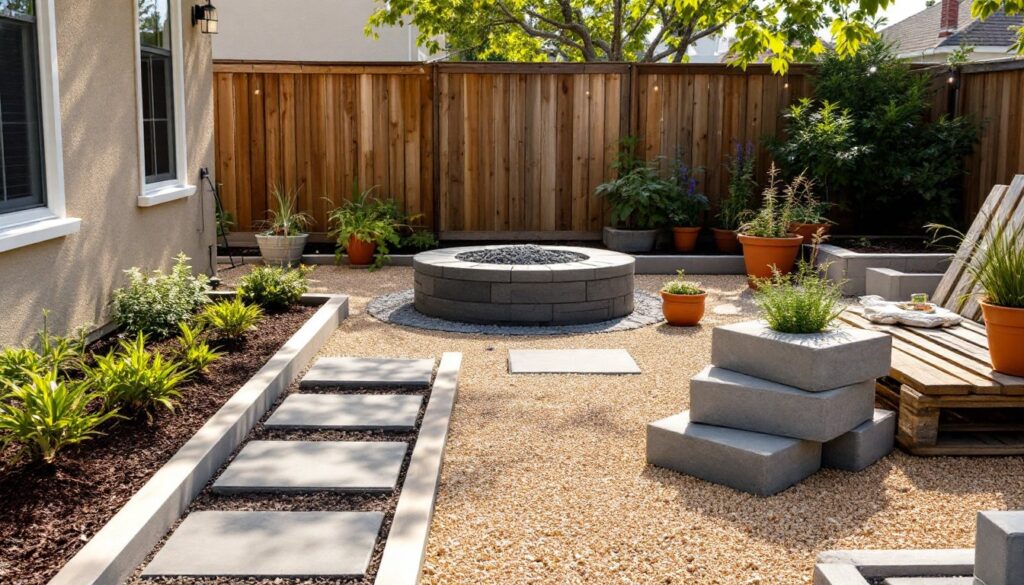

Grass lawns demand constant watering, weekly mowing, fertilizing, and reseeding, draining both time and money. For homeowners looking to cut maintenance while keeping outdoor spaces functional and attractive, ditching the grass makes practical sense. Going grass-free doesn’t mean settling for bare dirt or expensive hardscaping: there are dozens of low-cost materials and creative approaches that deliver durability, visual interest, and minimal upkeep. This guide walks through proven, budget-friendly alternatives that work in a variety of climates and yard sizes.
Key Takeaways
- Cheap no grass backyard ideas eliminate the need for weekly mowing, fertilizers, and herbicides, drastically cutting maintenance time and costs while reducing water usage by up to 75% compared to traditional lawns.
- Gravel and stone alternatives cost as little as $30–$50 per cubic yard and require only basic prep work like laying landscape fabric and edging to prevent weeds and runoff.
- Budget-friendly hardscaping with concrete pavers ($1–$2 per square foot) and stepping stones creates functional pathways and seating areas without professional installation or specialized tools.
- Living ground covers like clover and low-growing perennials (thyme, sedum, creeping phlox) offer natural alternatives that fix nitrogen in soil, attract pollinators, and require minimal maintenance once established.
- Creative DIY solutions like cinder block benches, pallet furniture, and container gardens bring affordable greenery and functionality to grass-free yards using repurposed or low-cost materials.
- A layered approach combining mulch zones, gravel pathways, and raised planting beds creates visually interesting outdoor rooms while maximizing durability and minimizing long-term expenses.
Why Go Grass-Free? Benefits Beyond Your Budget
Eliminating grass cuts water bills significantly. Turf lawns consume roughly 1 to 1.5 inches of water per week during the growing season, which adds up fast in dry climates or during drought restrictions. Grass-free yards use a fraction of that, especially when planted with native, drought-tolerant species or covered with inorganic materials.
Maintenance time drops dramatically. No more weekend mowing, edging, or dealing with a temperamental mower. Fertilizers, herbicides, and pest treatments become unnecessary, reducing both cost and chemical runoff into local waterways.
Durability improves in high-traffic areas. Gravel, pavers, and mulched zones hold up better than grass under foot traffic, pet activity, or play equipment. They don’t turn to mud in wet weather or develop bare spots that need patching.
Most grass-free backyard transformations require little specialized skill. Gravel spreading, mulch laying, and stepping stone placement are straightforward DIY tasks that don’t demand permits or professional installation in most jurisdictions.
Gravel and Stone: The Ultimate Low-Cost Foundation
Gravel offers the lowest cost-per-square-foot of any grass replacement. Pea gravel runs around $30–$50 per cubic yard, and one cubic yard covers roughly 100 square feet at a 3-inch depth. Crushed granite and decomposed granite (DG) are similarly priced and provide a firmer walking surface that compacts well.
Prep work is critical. Remove existing grass and weeds, then lay landscape fabric (3–4 oz. per square yard minimum) to suppress regrowth. Skip this step and weeds will punch through gravel within months. Pin the fabric with landscape staples every 3–4 feet.
Edging keeps gravel contained. Use steel or aluminum landscape edging, staked every 2–3 feet, or repurpose pressure-treated 2x4s along borders. Without edging, gravel migrates into planting beds and adjacent lawn areas.
Drainage is a natural advantage. Gravel allows rainwater to percolate straight into the soil, reducing runoff and eliminating puddles. In areas with heavy clay soil, gravel layers help prevent standing water that would drown grass roots anyway.
For a polished look, mix gravel sizes or combine pea gravel with larger river rock in planting bed borders. Gravel works especially well around fire pits, under decks, and in dog runs where grass struggles to survive.
Mulch, Wood Chips, and Natural Ground Covers
Hardwood mulch costs $25–$40 per cubic yard and provides a softer, more organic appearance than stone. A 3-inch layer suppresses weeds and moderates soil temperature, making it ideal around trees, shrubs, and perennial beds. Municipal yard waste programs often offer free or low-cost mulch and wood chips, call your local public works department.
Wood chips decompose over time, enriching the soil but requiring a top-up layer every 18–24 months. Budget about one cubic yard per 100 square feet for initial installation. Cedar and cypress mulches resist decay longer but cost slightly more.
Clover (white or micro clover) works as a living mulch and grass substitute. It tolerates foot traffic, fixes nitrogen in the soil, and stays green with minimal water. Seed costs around $10–$15 per pound, covering roughly 4,000 square feet. Clover doesn’t need mowing as frequently as grass, and it blooms, attracting pollinators.
Thyme, creeping phlox, and sedum are low-growing perennials that spread across bare ground. Plant them in drifts between stepping stones or as borders. These plants require an initial investment in starter plants (around $3–$6 per 4-inch pot), but they self-propagate and fill in over a season or two. Studies on lawn-free landscaping approaches highlight how layered ground covers reduce water use and support local ecosystems.
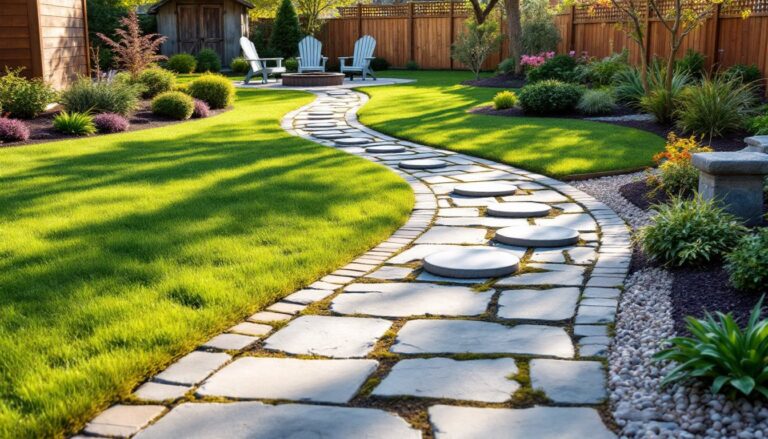
Combine mulch zones with gravel pathways for contrast and function. Mulch areas soften the look and work well under play structures, while gravel handles higher traffic.
Budget-Friendly Hardscaping with Pavers and Stepping Stones
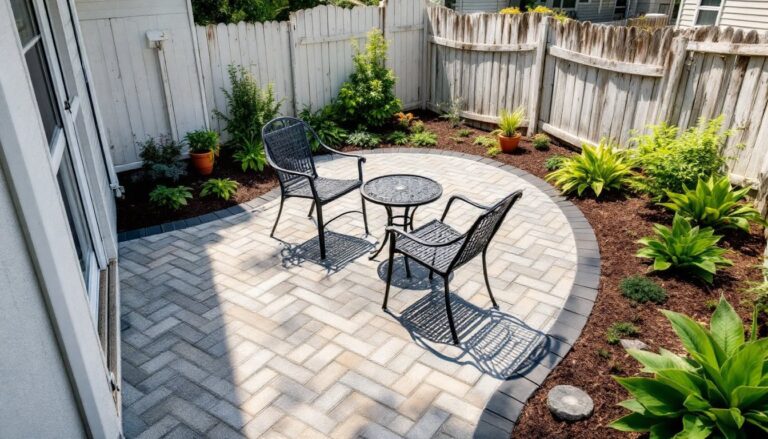
Concrete pavers start around $1–$2 per square foot at big-box stores. Standard 12×12-inch or 16×16-inch pavers create patios, pathways, or seating pads without needing mortar or specialized tools. Lay pavers over a 2–3 inch base of compacted gravel and a 1-inch layer of coarse sand for stability.
Use a hand tamper or plate compactor (rent for $40–$60 per day) to compact the gravel base. Skipping compaction leads to settling and uneven surfaces within months. Check level every few pavers with a 4-foot spirit level.
Stepping stones offer a low-material solution for paths through mulch or gravel. Natural flagstone runs $3–$6 per square foot, while cast concrete stepping stones cost $5–$10 each. Space stones 18–24 inches apart for a comfortable walking stride.
Reclaimed brick or urbanite (broken concrete chunks) can be sourced for free or cheap from demolition sites, classified ads, or salvage yards. Broken concrete pieces fit together like a jigsaw puzzle for rustic patios. Lay them on sand base and fill joints with decomposed granite or sand.
Polymeric sand (around $20 per 50-pound bag) fills joints between pavers and hardens when wetted, locking pavers in place and resisting weed growth. One bag covers roughly 50–80 square feet of joint space, depending on paver size and joint width.
For multi-level yards, low retaining walls (under 2 feet) built with concrete retaining blocks (around $2–$4 per block) create terraced zones for seating or planting without requiring engineered footings or permits in most areas. Always check local codes: walls over 4 feet typically require engineering.
Creative DIY Seating and Living Areas Without Grass
A gravel or mulch base makes it easy to drop in portable seating without worrying about killing grass or creating mud ruts. Cinder blocks ($2–$3 each) stack into low benches: add a 2×10 pressure-treated plank across the top for a finished seat. Stain or paint the wood for a custom look.
Pallet furniture repurposes free or cheap wooden shipping pallets (often available behind retail stores with permission). Sand rough edges, apply exterior stain, and stack or configure pallets into sectional seating, coffee tables, or planters. Use deck screws (not nails) to join pieces securely.
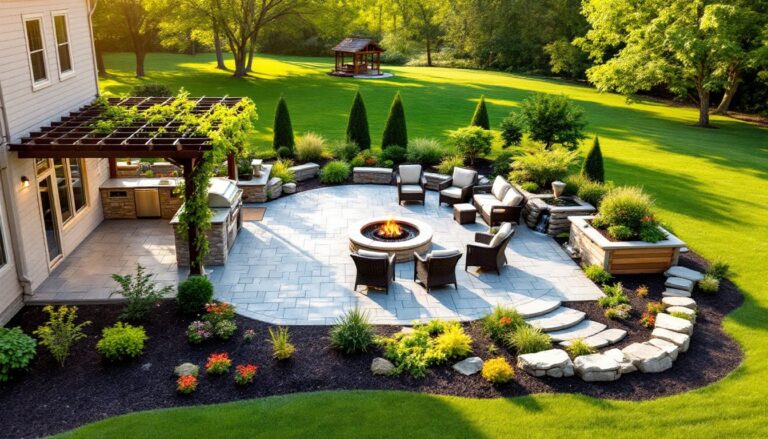
Define outdoor rooms with different ground cover materials. A decomposed granite pad anchors a seating area, surrounded by mulched planting beds and gravel pathways. Low-cost design strategies demonstrate how material transitions create visual zones without walls or fencing.
Outdoor rugs (polypropylene types run $40–$100 for 5×7 sizes) add color and comfort over gravel or pavers. They resist mildew and rinse clean with a hose.
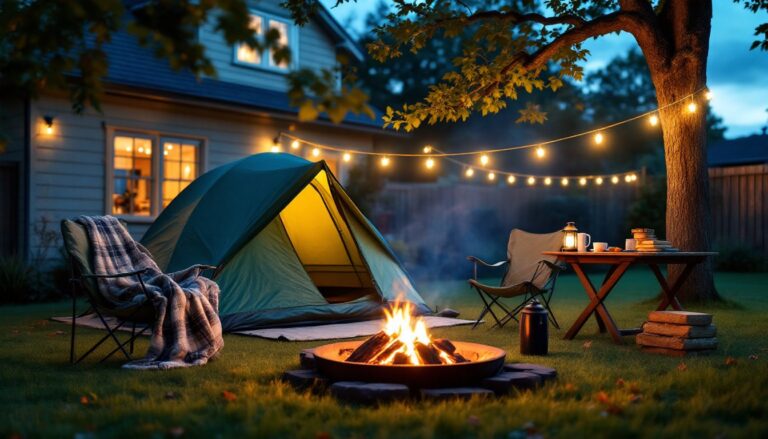
String lights (solar or plug-in LED strands at $15–$30 per 25-foot strand) stapled to fence posts or overhead pergola beams create ambiance without permanent wiring. Most residential exterior lighting doesn’t require permits if it’s low-voltage (under 30 volts) and not hardwired into household circuits. Always verify with local codes.
Fire pits sit directly on gravel bases. Steel fire rings cost $50–$150: surround them with a ring of flagstone or concrete retaining blocks for seating edges. Keep fire pits at least 10 feet from structures and check local fire regulations.
Adding Plants and Greenery the Affordable Way
Container gardens bring greenery without soil amendment or irrigation systems. 5-gallon buckets (often free from restaurants or bakeries) drill easily for drainage and hold tomatoes, peppers, herbs, or ornamental grasses. Paint exteriors with exterior latex paint for a finished look.
Native perennials cost less long-term than annuals and require no fertilizer once established. Regional native plant sales (often hosted by conservation groups or university extensions in spring and fall) offer 4-inch pots for $3–$8. Native plants adapted to local rainfall rarely need supplemental watering after the first season.
Raised beds built from untreated lumber or corrugated metal panels keep planting areas contained and elevated above gravel or mulch zones. A 4×8-foot bed built from 2×10 boards (around $12–$18 each: need six boards for a single-height bed) costs $70–$110 in materials. Fill with a mix of topsoil, compost, and peat moss or coconut coir.
Vertical gardening using trellises, wall-mounted planters, or repurposed pallets maximizes greenery in small yards. Attach a pallet vertically to a fence, line the back with landscape fabric, fill pockets with potting mix, and plant succulents, herbs, or trailing flowers.
Propagation from cuttings stretches plant budgets. Many perennials (lavender, rosemary, salvia, sedum) root easily in water or moist sand. Resources from home and garden experts detail propagation methods for dozens of common plants.
Mulch around all plantings to conserve moisture and reduce weeding. A single cubic yard of mulch ($25–$40) goes a long way in planting beds, and it integrates visually with broader mulched zones throughout the yard.
Conclusion
Grass-free backyards cut ongoing costs, reduce maintenance hours, and create functional outdoor spaces that hold up under real-world use. Combining gravel, mulch, pavers, and low-maintenance plants delivers a layered, interesting landscape without the constant upkeep grass demands. Start with one zone, perhaps a seating area or pathway, and expand as time and budget allow. Most of these projects require only basic tools, a weekend, and a willingness to get hands dirty.