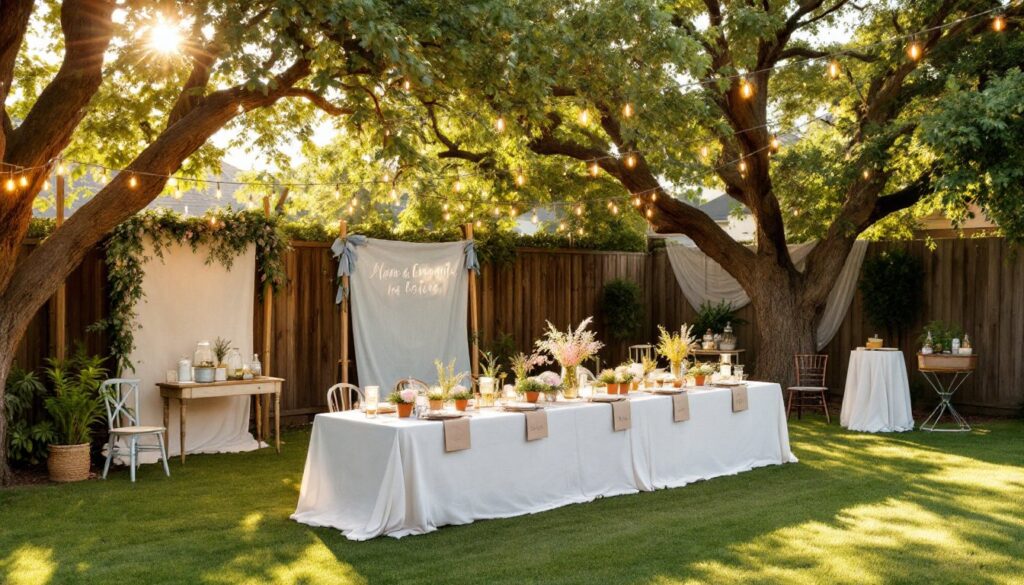

Hosting an engagement party in a backyard offers complete control over ambiance, layout, and budget, without the constraints of a rented venue. The challenge isn’t just decorating an outdoor space: it’s creating a functional setup that handles weather, traffic flow, and guest comfort while looking intentional. A successful backyard celebration requires the same planning approach as any home improvement project: assess the space, identify problem areas, and build solutions that work with existing conditions rather than against them.
Key Takeaways
- Backyard engagement party ideas succeed when you map the yard into functional zones, define traffic flow, and let existing features like trees and fences anchor your décor.
- Layer multiple lighting types—string lights, pathway solar stakes, and accent lighting—hung at 7.5+ feet high to create depth and avoid a cramped feeling.
- Use repetition and scale for budget-friendly décor: clusters of matching elements and potted herbs as table centerpieces deliver high impact without premium costs.
- Set up buffet-style food stations with proper temperature control, trash stations, and pre-batched cocktails in dispensers to reduce restocking needs and maintain guest comfort.
- Weatherproof your celebration with contingency plans: rent shade structures, lay outdoor rugs for muddy ground, secure décor against wind, and warn guests to dress for temperature changes.
- Create one or two personalized DIY projects—like a photo display clothesline or Polaroid station—to elevate the backyard engagement party and give it memorable character.
Setting the Scene: Creating the Perfect Ambiance
Ambiance comes down to lighting, sound control, and visual focal points. Treat the backyard like a room, define zones, create sight lines, and eliminate distractions.
Start by mapping the yard’s natural features. Trees provide anchors for hanging décor, fences offer vertical display space, and existing patios or decks establish hard-surface zones for tables or dance areas.
For visual cohesion, use fabric to soften hard edges. Outdoor-rated canvas or muslin can drape over pergolas, string between posts, or cover chain-link fencing. Secure fabric with zip ties, outdoor staples, or paracord, avoid tape, which fails in humidity. If the yard lacks structure, free-standing backyard transformations often rely on rented pipe-and-drape systems or DIY PVC frames wrapped in fabric.
Sound is easily overlooked. Backyards lack walls to contain conversation, so guests naturally speak louder. Position a Bluetooth speaker on a central table rather than against the house: this distributes music more evenly and reduces the need to crank volume.
Lighting Design for Evening Magic
String lights remain the most effective outdoor lighting solution, they’re weatherproof, scalable, and provide even illumination without harsh shadows. Use C7 or C9 bulb strings for larger yards (25-foot spacing between sockets) or Edison-style LED strings for intimate spaces (12-inch spacing).
Hang lights at a minimum height of 7.5 feet to clear head clearance, higher if possible to avoid a low-ceiling effect. Anchor points matter: use screw-in hooks on fascia boards, fence posts, or trees. For temporary setups, shepherd’s hooks or weighted light poles (10-foot height, available at event rental suppliers) work without permanent installation.
Layer lighting types for depth. String lights provide overhead glow, but add:
- Pathway lighting: Solar stakes along walkways (space every 6-8 feet)
- Accent lighting: Battery-operated LED spotlights aimed at trees or architectural features
- Table lighting: Flameless pillar candles or small lanterns (avoid real candles on windy evenings)
Run all plug-in lights through GFCI-protected outdoor outlets. If extension cords are necessary, use 14-gauge or heavier outdoor-rated cords and secure them along fence lines or under rugs to prevent tripping. Never daisy-chain more than three extension cords.
Budget-Friendly Décor Ideas That Look Expensive
High-impact décor comes from repetition and scale, not cost. A dozen identical elements look intentional: a mix of random items looks cluttered.
Greenery provides the best value. Grocery store flowers wilt fast, but potted plants double as décor and party favors. Buy 6-inch potted herbs (basil, rosemary, lavender) in bulk from a nursery, often $3-5 each, and cluster three per table. Wrap pots in burlap or craft paper secured with twine.
For vertical impact, create a backdrop wall using a simple frame. Build it from 2×4 studs (8 feet tall, 6-8 feet wide) with a horizontal cross-brace at 4 feet. Cover with canvas drop cloth, then attach greenery garland, paper flowers, or a fabric runner. Secure the frame with sandbag weights or stake it into the ground if on grass. Dedicated outdoor décor guides, like those on Gardenista, often showcase similar framed installations.
Table runners made from butcher paper or kraft paper rolls cost under $15 for 150 feet. Run them down the center of tables, then use them as a canvas for hand-lettered menus, guest messages, or scattered florals.
Avoid balloons in outdoor settings, they deflate in heat, blow away in wind, and read juvenile unless used in uniform installations (like a balloon arch, which requires a frame and 200+ balloons to look polished).
For seating, mismatched chairs work if unified by a common element. Tie the same ribbon color to each chair back, or drape them all with the same linen napkin. Rental chairs (basic resin folding chairs) cost $2-4 each and eliminate the mismatch entirely.
Food and Beverage Stations for Easy Entertaining
Buffet-style service reduces bottlenecks and eliminates the need for servers. The key is building stations that hold temperature, stay accessible, and don’t require constant restocking.
Use 6-foot folding tables (standard 30-inch height) as the base for all stations. Cover with tablecloths that drop to the ground, this hides storage underneath and creates a cleaner look. Position tables against a fence or wall to create a one-sided service flow.
For cold items, use aluminum tubs filled with ice. A standard 18-quart tub holds roughly 20 bottles or cans. Refresh ice every 90 minutes in warm weather. For wine and beer, bury bottles halfway into the ice rather than piling them on top, this maximizes contact and chills faster.
Hot food requires chafing dishes or slow cookers. If using chafing dishes, position them on a separate table away from flammable décor, each Sterno fuel can burns at open-flame temperatures. Slow cookers are safer and hold temperature longer, but require access to outdoor GFCI outlets. Plan for one outlet per two slow cookers max to avoid tripping breakers.
Trash and recycling stations prevent clutter. Set up 32-gallon bins in visible locations, one near the food station, one near seating. Use clear signage and bag bins with heavy-duty liners. Weigh bins down with a brick inside the liner to prevent tipping.
For beverage stations, offer pre-batched drinks in 2-gallon glass dispensers rather than individual mixing. This reduces mess and keeps the station tidy. Many outdoor entertaining ideas emphasize pre-made cocktails as a time-saver. Position dispensers at table edge with drip trays underneath, even sealed spigots drip.
Seating Arrangements and Layout Tips
Traffic flow dictates layout success. Map the yard in zones: entry, seating, food, and activity areas. Keep pathways at least 3 feet wide to allow two people to pass comfortably.
For seating, calculate 10-12 square feet per guest in open lawn areas, 8-10 square feet on hard surfaces like patios. A standard 60-inch round table seats 8 comfortably: a 6-foot rectangular table seats 6-8 depending on whether ends are used.
Avoid placing all seating in rows. Cluster tables in small groupings, two tables of 6 feel more intimate than one table of 12. Leave at least 4 feet between table edges to allow chair movement and server access.
If the yard slopes, position seating on the flattest section and use the slope for food stations or standing areas. Guests tolerate uneven ground while standing better than while seated. For significant slopes, rent interlocking deck tiles or lay down plywood sheets (¾-inch thickness) as temporary platforms. Secure plywood with landscape stakes driven through pre-drilled corners.
For guest comfort on soft ground, place patio pavers or wood planks under table legs to prevent sinking. An 18×18-inch paver under each leg works for most folding tables. This is especially critical after rain or on irrigated lawns.
Create an entry focal point separate from the seating area, a small table with a guest book or welcome sign gives arriving guests a clear first destination and prevents crowding near the seating zones. Following beginner-friendly planning steps can simplify the zoning process for those new to hosting outdoor events.
DIY Projects to Personalize Your Party
Personalized elements separate a backyard party from a generic event. Focus on one or two custom projects rather than scattering small crafts that lack impact.
Photo displays work well in outdoor settings. String a clothesline between two posts using 1/8-inch galvanized cable and attach photos with mini clothespins. Keep the line taut by using a cable tensioner at one end (available in the hardware aisle near wire rope). Print photos in 5×7-inch format, smaller sizes get lost outdoors, larger ones curl in humidity.
Build a welcome sign using a 1×12 pine board (4-6 feet long). Sand smooth with 120-grit sandpaper, then paint with exterior latex paint. Use a projector to trace lettering, or apply vinyl letter stickers for clean lines. Prop the sign on a small tabletop easel or lean it against a decorative ladder.
For a guest activity, set up a Polaroid station with a simple backdrop. Use a 5×7-foot canvas drop cloth as the backdrop, hung from a spring-tension curtain rod wedged between two posts. Add a small table with the camera, film, and a scrapbook where guests can tape their photos and write messages. Polaroid film costs roughly $0.75-1.00 per shot, so budget 1-2 photos per guest.
Mason jar lanterns are simple and reusable. Wrap 24-gauge craft wire around the jar mouth (under the threads), twist to secure, and form a handle. Drop in a battery-operated tea light. Hang jars from tree branches using S-hooks and twine, or line them along pathways.
For table markers, paint terra cotta pots (4-inch diameter) with chalkboard paint and label with chalk. Insert a small potted succulent. Guests can take these home, and the pots are durable enough for future use. Outdoor décor specialists like The Spruce feature similar reusable projects.
Weatherproofing Your Celebration
Weather planning isn’t optional, it’s a structural requirement. Even clear forecasts shift, and outdoor events need contingency plans.
Shade becomes critical after 90 minutes of sun exposure. If the yard lacks tree cover, rent a 10×10-foot pop-up canopy ($50-75 for a weekend). Anchor canopies with weight bags (25 pounds minimum per leg) or ground stakes on grass. Canopies resist light wind but fail in gusts over 20 mph, check forecasts and have a take-down plan.
For larger coverage, consider a pole tent (20×20 feet or larger), but these require professional installation and cost $300-800 depending on size and region. Pole tents handle wind better than frame tents, but both need staking into the ground, which means driving 24-inch steel stakes, not feasible on hardscape or above buried utilities. Call 811 before staking to locate underground lines.
Rain is the bigger threat. Tents keep guests dry but don’t address muddy ground. Lay down outdoor rugs or interlocking rubber tiles in high-traffic areas before the event. If rain is likely, set up a covered entry area near the house where guests can leave wet shoes or umbrellas.
Have micro-fiber towels and extra trash bags on hand. Bags double as emergency ponchos or seat covers if furniture gets wet.
Wind destroys lightweight décor. Secure tablecloths with clips (not just draping), weigh down centerpieces with sand or stones, and avoid tall, top-heavy arrangements. String lights should have tight connections, loose sockets rattle and fail in wind.
For evening events, temperature drops fast after sunset. Warn guests in advance, but also provide fleece throw blankets (discount stores sell them for $5-10 each) draped over chair backs. If budget allows, rent patio heaters (propane models cover a 10-foot radius and cost $75-100 per unit for a weekend).
Have a backup indoor space ready. Walk through the scenario: if the weather turns severe, where do guests go, and how quickly can you move essentials inside? A clear contingency plan reduces panic and keeps the event running.