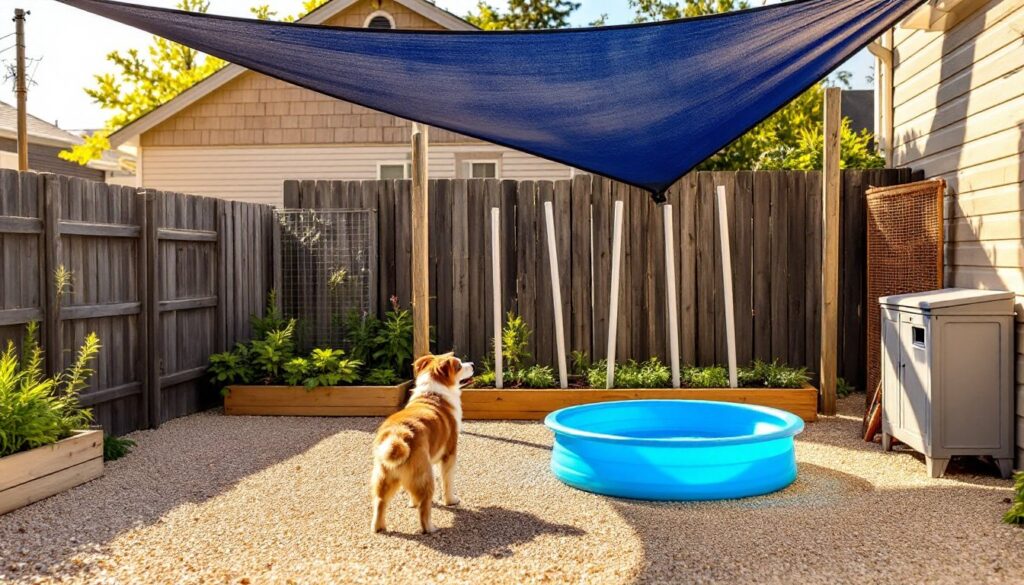

Building a <a href="https://i-zaitaku.com/top-backyard-makeovers/”>backyard that keeps dogs happy and yards intact doesn’t require a landscape architect’s budget. Most pet-friendly upgrades use affordable materials and straightforward DIY techniques that homeowners can tackle over a few weekends. The key is prioritizing durability and safety over cosmetic perfection, dogs don’t care about Instagram-worthy flowerbeds, but they need secure boundaries, cool shade on hot days, and surfaces that won’t turn muddy or dangerous. With basic planning and the right material choices, anyone can create a space that stands up to paws, claws, and endless games of fetch.
Key Takeaways
- Dog-friendly backyard ideas prioritize durable, affordable surfaces like pea gravel, decomposed granite, and artificial pet turf rather than high-maintenance landscaping.
- Secure boundaries using welded wire livestock panels or 9-gauge chain-link fencing are cost-effective escape-proof options that protect your dog during off-leash play.
- Shade structures like UV-rated shade sails ($30–$80) and simple lean-to pergolas prevent heat exhaustion and make your yard usable year-round.
- Homemade play features—including DIY dig pits, PVC weave poles, tire swings, and platforms—provide mental and physical stimulation at minimal cost.
- Avoid toxic plants like azaleas, lilies, and daffodils; choose pet-safe alternatives such as rosemary, thyme, and Buffalo grass instead.
- Organized cleanup stations with storage benches, waste bins with locking lids, and rinse stations keep mud and mess manageable while maintaining yard functionality.
Create Safe and Durable Ground Surfaces
Grass sounds ideal until a 60-pound dog runs the same path daily and turns it into a mud trench. Choosing the right ground cover prevents erosion, mud tracking, and injury.
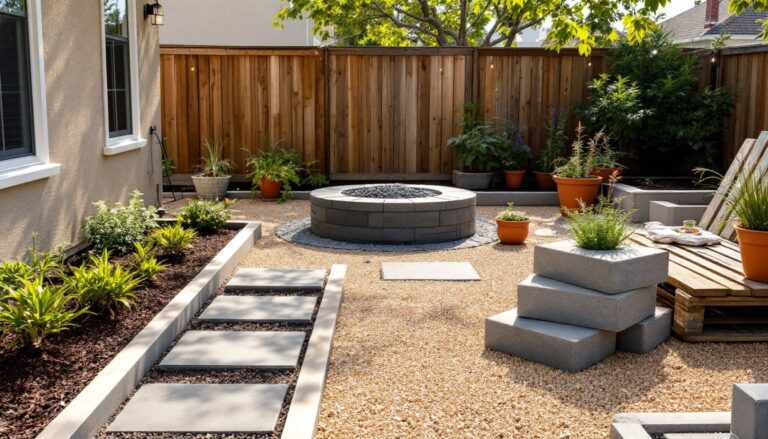
Pea gravel (3/8-inch size) costs $30–$50 per ton and drains well without creating dust clouds. Install landscape fabric underneath to suppress weeds. Avoid crushed stone or sharp gravel that can injure paw pads. Spread at least 2–3 inches deep to prevent dogs from digging down to bare soil.
Wood chips or shredded bark work in shaded areas but break down faster in high-traffic zones. Use cedar or cypress chips (natural insect repellent) rather than cocoa mulch, which is toxic to dogs. Refresh annually.
For heavy-use play areas, decomposed granite (DG) compacts into a firm, dust-free surface when wetted and rolled. It costs around $40–$60 per cubic yard. Wet it with a hose, compact with a hand tamper or rented plate compactor, and it’ll hold up to digging better than loose gravel.
Artificial turf built for pets includes drainage perforations and antimicrobial backing. Quality products run $5–$8 per square foot installed, but DIY installation cuts costs significantly. Lay it over a compacted gravel base with landscape fabric, skip the padding used for decorative lawns. Rinse weekly to prevent odor buildup.
Avoid solid concrete or asphalt in full sun. Both retain heat and can burn paws in summer. If pouring a patio, leave gaps for pavers or install it under a roof or shade structure.
Budget-Friendly Fencing and Boundary Solutions
A secure perimeter is non-negotiable for off-leash play. Fencing doesn’t have to be expensive, but it does need to be escape-proof.
Welded wire livestock panels (16-foot by 4-foot, around $30–$50 each) attach to 4×4 treated posts set in concrete. They’re galvanized, rust-resistant, and hard to climb or chew through. For diggers, bury the bottom 6–12 inches or install an L-footer: bend the wire outward at ground level and cover it with dirt or gravel.
If privacy matters, attach reed fencing or bamboo screening to the wire panels with zip ties. Both cost $50–$100 per 16-foot roll and block sightlines that trigger barking.
Chain-link fencing remains one of the most cost-effective options at $8–$15 per linear foot for DIY installation. Use 9-gauge wire (thicker than standard 11-gauge) for durability. Add vinyl slats for privacy if needed.
For small yards or budget constraints, consider electric pet containment systems ($100–$300 for wireless models). These require training and aren’t suitable for all dogs, especially those with high prey drive. They also don’t keep other animals out of the yard.
Check local building codes before installing any fence over 6 feet tall, most jurisdictions require permits. For renters, freestanding exercise pens (24–48 inches tall, $50–$150) or temporary snow fencing staked with metal T-posts provide short-term boundaries without permanent installation.
DIY Shade Structures and Cool-Down Zones
Dogs overheat faster than humans. Providing shaded rest areas prevents heat exhaustion and makes the yard usable year-round.
Shade sails (10×10-foot triangular or square) cost $30–$80 and mount to existing structures or dedicated posts. Use UV-rated polyethylene fabric (blocks 90%+ of UV rays). Anchor corner grommets to galvanized eye bolts screwed into fascia boards, fence posts, or 4×4 posts set in concrete. Angle the sail to allow water runoff, flat installations collect rain and sag.
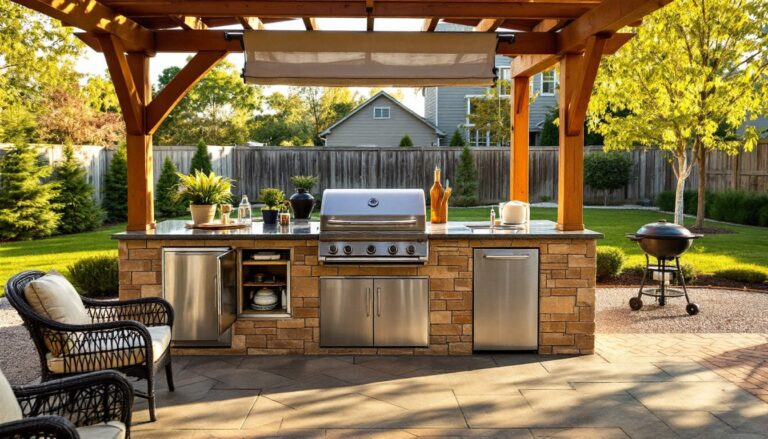
For a permanent structure, build a simple lean-to pergola against the house or garage. Use 2×6 pressure-treated rafters spaced 16 inches on center, spanning no more than 8 feet without additional support. Top with corrugated polycarbonate roofing panels ($20–$40 per 8-foot panel) for waterproof shade. Attach with roofing screws and neoprene washers to prevent leaks. This is a cosmetic addition: it doesn’t require a permit in most areas unless attached to a load-bearing wall, check local codes.
Repurposed tarps work temporarily but degrade in UV light within a season. If using one, choose canvas or heavy-duty polyethylene, not the blue poly tarps that shred in wind.
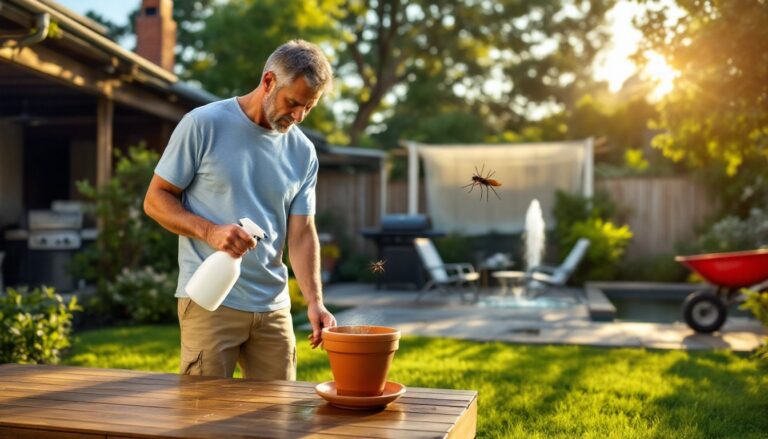
For cooling stations, place a kiddie pool (hard plastic, $15–$30) in the shade. Dump and refill daily to prevent mosquitoes. Some dogs won’t use pools, don’t force it. Alternatively, set up a misting system using a garden hose soaker attachment ($10–$20) strung along a fence or pergola. Many designs from budget-friendly renovators use simple PVC pipe with drilled holes connected to a hose timer.
Affordable Play and Exercise Features
Dogs need mental and physical stimulation. Simple DIY features provide that without expensive agility kits.
Dig pits redirect digging instinct. Frame a 4×4-foot or larger area with landscape timbers or 2×10 boards staked with rebar. Fill with play sand ($5–$8 per 50-pound bag). Bury toys to encourage use and discourage digging elsewhere in the yard.
Homemade weave poles use 1-inch PVC pipe cut into 3-foot lengths and inserted into sand-filled 5-gallon buckets or driven into the ground. Space them 24 inches apart. Total cost: under $20 for six poles.
For jumps, stack cinder blocks ($2–$3 each) and rest a 1×6 or 2×4 board across them. Adjust height based on dog size, 8–12 inches for small breeds, 16–24 inches for larger dogs. Sand sharp edges to prevent injury.
Tire swings made from old tractor tires (free from tire shops or farm supply stores) hung with climbing rope from a sturdy tree branch provide chew-resistant play. Drill drainage holes in the bottom.
A simple elevated platform (a pallet topped with outdoor carpet or plywood) gives dogs a vantage point and satisfies their instinct to survey territory. Secure with deck screws and check for protruding nails.
Rotate features seasonally to maintain interest. Dogs get bored with static setups just like people do.
Pet-Safe Landscaping and Garden Choices
Not all plants belong in a dog yard. Some common landscaping choices are toxic, and others simply won’t survive constant traffic.
Avoid these toxic plants: azaleas, rhododendrons, oleander, sago palm, foxglove, lilies, daffodils, tulips, and castor bean. The ASPCA maintains a full toxic plant database online.
Dog-safe alternatives include rosemary (hardy, drought-tolerant, aromatic), thyme (ground cover that tolerates light foot traffic), Buffalo grass (low-water, tough turf), and creeping thyme or clover (both handle more wear than traditional lawn grass).
For shrubs, boxwood, juniper, and forsythia are non-toxic and durable. Plant them behind barriers or raised beds if dogs dig.
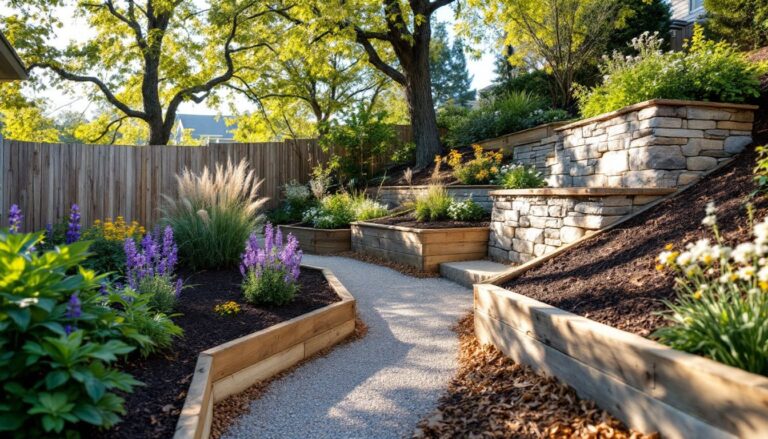
Raised garden beds (12–18 inches high) built from 2×10 or 2×12 untreated cedar or composite boards keep vegetables and flowers out of paw range. Use landscape fabric and hardware cloth on the bottom to prevent digging from below. Many outdoor makeover guides recommend this for households with pets.
Skip cocoa mulch (toxic), fertilizers with bone meal (attracts chewing), and slug bait containing metaldehyde (deadly if ingested). Use pet-safe fertilizers with naturally derived ingredients and diatomaceous earth for pests.
Pathways made from flagstone pavers ($3–$6 per square foot) or stepping stones set in gravel direct traffic and protect plantings. Space stones close enough that dogs walk on them, not around them. Inspiration for cohesive outdoor plans often includes defined pathways.
Smart Storage and Cleanup Stations
Keeping toys, leashes, and cleanup supplies organized prevents clutter and makes yard maintenance faster.
Outdoor storage benches with waterproof lids ($50–$150) hold toys, balls, and grooming tools. Place one near the door for easy access. DIY versions use 2×4 framing and 3/4-inch plywood with a hinged lid. Line the interior with pond liner or heavy plastic sheeting for waterproofing.
Wall-mounted hooks or a pegboard panel attached to the garage or shed exterior organizes leashes, harnesses, and long-handled poop scoopers. Use galvanized or stainless steel hooks, plastic breaks in sun.
For waste management, install a dog waste station near the door or play area. Mount a small trash can with a locking lid ($20–$40) on a fence post or wall. Keep biodegradable bags in a weather-resistant dispenser ($10–$15) nearby. Empty weekly to prevent odor.
Rinse stations for muddy paws can be as simple as a garden hose with a spray nozzle and a rubber boot tray near the back door. For a dedicated setup, install a frost-free outdoor faucet ($30–$50, plus installation) if one isn’t already present. Pair it with a handheld pet sprayer attachment ($15–$25).
Practical makeover tips often include cleaning zones to minimize indoor mess. Keep a towel caddy or outdoor storage basket stocked with microfiber towels for quick wipedowns before dogs come inside.
Conclusion
A dog-friendly backyard doesn’t require a contractor or a second mortgage. Durable surfaces, secure fencing, and thoughtful features like shade structures and play areas turn any yard into a space dogs can safely enjoy. Focus on materials that handle wear, plants that won’t poison, and layouts that make cleanup manageable. Most of these projects take a weekend or two and use skills any DIYer already has, measuring, cutting, and fastening. The result is a yard that works as hard as the dog using it.