
A small backyard doesn’t mean sacrificing an outdoor retreat. Gazebos offer shade, structure, and a defined gathering spot without overwhelming limited square footage. Whether the goal is creating a quiet reading nook or a covered dining area, the right gazebo design can turn an underutilized corner into the yard’s best feature. The key is choosing a footprint and style that works with existing dimensions, not against them.
Key Takeaways
- Small backyard gazebo ideas transform underutilized outdoor space into functional gathering zones without overwhelming limited square footage.
- Corner gazebos (6×6 to 8×8 feet) with octagonal or hexagonal designs maximize space efficiency and preserve open circulation areas in tight yards.
- DIY gazebo construction costs $600–$900 in materials using pressure-treated lumber and asphalt shingles, significantly less than prefab kits priced at $1,500–$2,500.
- Multi-functional designs with flexible furniture arrangements and built-in electrical conduit allow your gazebo to serve dining, lounging, and workspace needs.
- Material selection matters in small yards—lighter colors and lighter-weight options like cedar, vinyl, or metal prevent the structure from overwhelming the space.
- Slatted roofs, translucent panels, and pergola-style designs maintain open sight lines and prevent a small yard from feeling cramped or enclosed.
Why a Gazebo Is the Perfect Addition to Your Small Backyard
Gazebos anchor outdoor spaces in a way few other structures can. They create instant definition, turning bare grass or patchy gravel into a purposeful zone. In yards where every square foot counts, a gazebo offers vertical interest without eating up ground space the way sprawling decks or patios do.
A well-placed gazebo also extends usable hours. Rain, harsh sun, and light wind become manageable when there’s a solid roof overhead. That’s particularly valuable in smaller yards, where shade trees may be too large or slow-growing to justify planting.
From a property value standpoint, gazebos signal finished outdoor space. Buyers see covered seating and imagine entertaining, not unfinished projects. Even a simple kit structure reads as intentional design, especially when paired with thoughtful landscaping or lighting.
Finally, gazebos require less commitment than permanent additions. Most don’t need footings deeper than 12 inches, and many municipalities classify them as accessory structures that don’t require permits if they stay under 120 square feet. Always check local building codes, height restrictions, setback requirements, and wind load standards vary by jurisdiction.
Compact Corner Gazebo Designs That Maximize Space
Corner gazebos make excellent use of otherwise awkward yard geometry. Instead of centering a structure and losing circulation space on all sides, tucking a gazebo into a corner preserves the open middle for foot traffic, play areas, or garden beds.
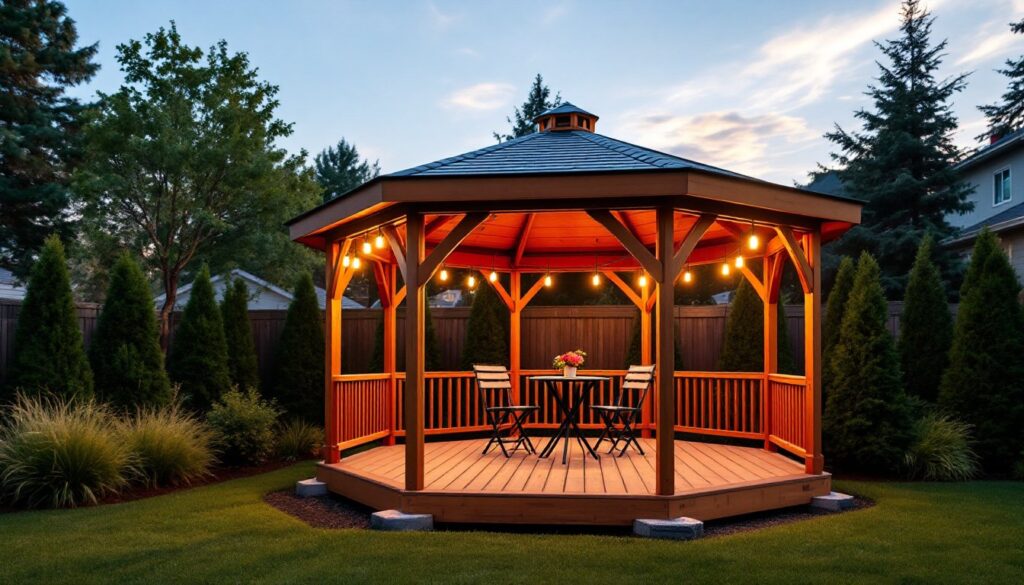
Most corner designs run 6 feet by 6 feet to 8 feet by 8 feet, leaving enough room for a small bistro set or a pair of lounge chairs. Octagonal or hexagonal footprints work especially well in corners because the angled walls soften hard fence lines and create a more open feel.
Anchor the structure with 4×4 pressure-treated posts set in concrete footings. Use joist hangers and galvanized hardware throughout, corner installations often see more lateral wind load than freestanding center structures. Roof pitch matters, too. A 4:12 slope sheds water effectively without looking too tall or heavy in proportion to the footprint.
For materials, cedar or redwood shingles add warmth, but architectural shingles that match the house keep the design cohesive and cost about $90 per square installed. Consider running lattice or horizontal slat panels along one or two sides to define the space without fully enclosing it. That maintains airflow and keeps sight lines open, which prevents the yard from feeling chopped up.
Modern Minimalist Gazebo Styles for Contemporary Homes
Clean lines and restrained palettes define modern gazebo design. Skip the gingerbread trim and ornate railings, contemporary structures rely on material quality and proportion, not decoration.
Steel frames powder-coated in matte black or charcoal gray pair well with flat or low-slope roofs. Use 16-gauge square tubing for posts and beams: it’s strong enough to span 10 feet without sagging and thin enough to maintain a sleek profile. For the roof, consider a single-slope (shed-style) design that angles toward the back. It’s easier to frame than a hip or gable, and it integrates naturally with modern architecture.
Polycarbonate panels make a practical roof material for minimalist builds. They’re lightweight, UV-resistant, and available in bronze or frosted finishes that diffuse light without creating a greenhouse effect. Expect to pay around $3–$5 per square foot for multiwall polycarbonate, compared to $1.50–$2.50 for corrugated metal.
Flooring matters in modern designs. Poured concrete with a broom finish, large-format pavers, or composite decking in gray or charcoal tones all reinforce the contemporary aesthetic. Avoid pressure-treated wood stained dark brown, it reads traditional, not modern. If using wood, go with ipe or thermally modified ash left natural or sealed with a clear penetrating oil.
DIY Gazebo Ideas for Budget-Conscious Homeowners
Building a gazebo from scratch costs significantly less than buying a prefab kit, especially for anyone comfortable with a miter saw and impact driver. A basic 8-foot by 8-foot structure using pressure-treated lumber and asphalt shingles typically runs $600–$900 in materials, compared to $1,500–$2,500 for comparable kits.
Start with a simple square or rectangular plan. Use 4×4 posts, 2×6 rafters, and 2×4 purlins (horizontal supports that run perpendicular to rafters). Frame the roof at a 5:12 pitch, it’s steep enough for water runoff but not so steep that cutting rafter tails becomes complicated. Free DIY furniture plans often include gazebo designs with cut lists and hardware specs, which eliminates most of the guesswork.
For roofing, skip the cedar shakes unless there’s a specific aesthetic goal. Three-tab asphalt shingles cover about 33 square feet per bundle, cost around $30 per bundle, and last 15–20 years with minimal maintenance. Use roofing felt (15-pound minimum) as underlayment, and secure shingles with 1-inch roofing nails spaced per manufacturer specs.
Foundations can be as simple as 12-inch-diameter concrete footings poured into cardboard tube forms. Dig below the frost line (check local codes, this ranges from 12 inches in southern zones to 48 inches in northern climates). Embed galvanized post anchors in the wet concrete, then bolt the 4×4 posts once cured. This approach is code-compliant in most areas and far easier than pouring a full slab.
Multi-Functional Gazebo Ideas: Dining, Lounging, and More
The best small gazebos do double or triple duty. A structure designed for morning coffee can host evening dining with the right furniture swap. Planning for flexibility from the start prevents the gazebo from becoming a single-use decoration.
For dining, budget at least 10 feet by 10 feet to fit a standard round table and four chairs with room to pull out seats. If the footprint is smaller, consider built-in benches along two sides with a narrow farmhouse-style table. That setup seats four comfortably in an 8-foot by 8-foot space and eliminates chair storage.
Lounge-focused gazebos work well with 6-foot by 8-foot footprints. Add a daybed, hammock, or pair of deep-seat chairs. Run electrical in-ground conduit during construction (before pouring footings) to support string lights, ceiling fans, or outdoor speakers later. Use 12-gauge wire on a 20-amp circuit if planning to add a fan, most outdoor-rated models draw 60–90 watts but need startup current headroom.
Home offices and workout zones are increasingly common gazebo uses, especially in smaller homes where indoor space is tight. For these functions, consider adding removable privacy panels, roll-down shades, or even removable glass inserts for three-season use. Insulated roof panels aren’t standard, but adding a layer of rigid foam board between purlins before installing roof sheathing cuts heat gain substantially. Many outdoor space transformations incorporate multi-use structures to maximize limited square footage.
Material and Design Considerations for Small Spaces
Material choice affects not just durability and maintenance, but how the gazebo fits visually into a small yard. Heavy timber structures with dark stains can overwhelm tight spaces, while lighter materials keep things open and airy.
Pressure-treated pine is the budget standard. It’s rot-resistant, widely available, and accepts stain well. Expect to pay around $12–$18 per 8-foot 4×4 post and $8–$12 per 2x6x8. Downside: it’s prone to warping if not properly stacked and acclimated before installation. Let lumber sit stickered (separated by small spacers) for at least a week before cutting.
Cedar costs roughly 50% more than pressure-treated but resists rot naturally and weathers to a silver-gray patina if left unsealed. It’s lighter in color and weight, which helps in small yards. Use clear or knotty grades depending on budget, knotty is perfectly serviceable for structural framing.
Vinyl and composite kits appeal to homeowners who want zero maintenance. They resist fading, splitting, and insect damage, but kits often lock users into fixed sizes and limited customization. Quality varies wildly, cheaper kits use thin-wall extrusions that flex and feel flimsy. Look for products with 0.160-inch minimum wall thickness on posts.
Metal structures (aluminum or powder-coated steel) hold up well in coastal or high-humidity areas where wood struggles. They’re also the lightest option by weight, which matters if installing over a deck or patio that wasn’t designed for a heavy load. Many 2026 outdoor trends emphasize mixed materials, like steel frames with wood accents.
Roof material impacts sight lines more than most homeowners anticipate. Solid roofs (shingles, metal panels) block sky views entirely, which can make a small yard feel closed in. Consider slatted roofs, pergola-style crossbeams, or translucent panels if maintaining openness is a priority. For covered outdoor entertaining ideas, partial coverage often works better than full enclosure.
Safety note: Always wear safety glasses when cutting lumber and hearing protection when using power saws. If working with pressure-treated wood, wear gloves and a dust mask rated N95 or higher, the preservatives are irritants. Dispose of treated lumber scraps properly: never burn them.
Conclusion
A well-chosen gazebo turns a small backyard from overlooked to intentional. Whether it’s a corner structure that frees up the yard’s center, a minimalist steel frame, or a DIY build that stays under budget, the best designs prioritize function and proportion over unnecessary ornamentation. Measure carefully, build to code, and choose materials suited to the climate and intended use.